
Introduction
Choosing the wrong shipping box is one of the most overlooked sources of product damage, unnecessary shipping costs, and customer dissatisfaction. With 85 million packages arriving damaged in 2024—a 30% year-over-year increase—inadequate packaging has become a critical operational vulnerability for businesses that ship regularly.
The right box directly affects damage rates, carrier fees through dimensional weight pricing, returns processing costs, and brand perception. For e-commerce, manufacturing, and distribution operations shipping at scale, these decisions carry real financial weight.
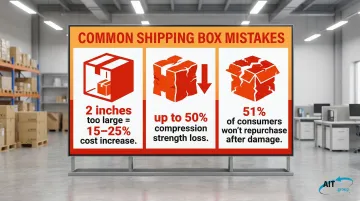
51% of consumers won't repurchase after receiving damaged goods, and damage-related losses are projected to reach $4 billion in 2025.
This guide breaks down the main types of shipping boxes, the key selection criteria every buyer should evaluate, and common mistakes that drive up shipping costs.
Key Takeaways
- Double-wall corrugated boxes are the industry standard, balancing strength, weight, and versatility for most shipping needs
- Box size must match product dimensions closely; oversized boxes increase carrier fees and damage risk
- Box strength (ECT or Mullen burst rating) should align with item weight — both are listed on the manufacturer's stamp
- A supplier with broad inventory and volume pricing reduces per-unit costs and simplifies procurement
Types of Shipping Boxes and Their Best Uses
A shipping box in a commercial context is a structural container designed to protect goods in transit, rated for specific load and stacking conditions. The corrugated fiberboard market reached $47 billion in 2024, shipping 381 billion square feet of material, making it the dominant choice for commercial shipping.
Material Categories
Two primary material categories serve different shipping needs:
Corrugated cardboard features a multi-layer, fluted structure with superior cushioning and load-bearing capacity. This engineered material consists of a fluted corrugated sheet bonded to one or two flat linerboards, providing the strength required for most commercial applications.
Paperboard is a single-layer material appropriate only for lightweight retail packaging like folding cartons. For commercial shipping applications, corrugated is the industry default.
Common Corrugated Box Styles
Regular Slotted Carton (RSC) is the most widely used shipping box style. Four equal flaps meet at the center, making it cost-efficient, easy to automate, and available in the widest range of sizes. Minimal material waste and high manufacturing efficiency keep it the go-to format across industries — it's also the most common style among the 1,000+ box sizes Alliance Packaging Group keeps in stock for immediate shipment.
Full Overlap Cartons (FOL) feature flaps the full width of the box, creating complete overlap that provides extra bottom strength. This style is essential for heavy items requiring additional support during stacking or when placed on their side.
Telescoping Boxes consist of separate top and bottom pieces that fit over each other. These are ideal for items needing adjustable depth or double-wall protection without custom sizing.
Mailer Boxes for e-commerce feature self-locking tabs and require no tape, speeding up packing operations while providing a professional unboxing experience.
Corrugated Trays serve display or retail shipping applications where products need to remain visible or accessible during distribution.
Understanding Corrugated Flute Types
Corrugated boxes differ by flute type, which determines cushioning and stacking strength:
| Flute Type | Thickness | Flutes per Foot | Stacking Strength | Cushioning | Typical Use Case |
|---|---|---|---|---|---|
| A-Flute | 4.7-5.0 mm | ~33 | Best | Best | Fragile/heavy items; long-distance transport |
| C-Flute | 3.5-4.0 mm | ~39 | Good | Good | Industry standard for general shipping and e-commerce |
| B-Flute | 2.5-3.0 mm | ~47 | Fair | Fair | Canned goods, trays, die-cut mailers; good print surface |
| E-Flute | 1.0-1.8 mm | ~90 | Poor | Poor | Retail packaging, small items, high-quality graphics |
| F-Flute | 0.8-1.2 mm | ~125 | Poor | Poor | Luxury packaging, cosmetics, small electronics |
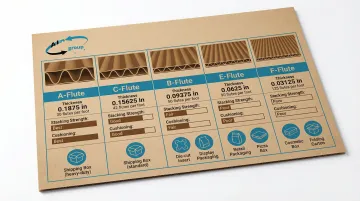
Double-wall and triple-wall constructions combine multiple flute layers for heavy or industrial shipments requiring maximum protection.
Reading the Box Certification Stamp
Choosing the right flute is only part of the equation — the manufacturer's stamp on every corrugated box tells you whether it can actually handle your load. Two ratings appear on these stamps:
| Rating | What It Measures | When It Matters |
|---|---|---|
| Edge Crush Test (ECT) | Stacking strength (top-to-bottom compression resistance) | Palletized loads, warehouse stacking; common ratings: 32 ECT standard, 44 ECT heavy-duty, up to 90 ECT for triple-wall |
| Mullen Burst Test | Puncture resistance (force to rupture the box wall) | Parcel networks with rough handling, or products with sharp edges that could push through from inside |
Match the rating to your shipping environment:
- Choose ECT when boxes will be stacked during transit or warehouse storage
- Choose Mullen when boxes ship individually through parcel networks or contain items that could puncture the walls
Key Factors to Consider When Choosing the Right Shipping Box
Box selection depends on product type, shipping volume, carrier requirements, and industry. There's no universal "best" box — only the right box for a given application. The six factors below connect box specifications directly to outcomes: damage rates, carrier fees, and per-shipment costs.
Box Size and Dimensional Weight
Choosing correct interior box dimensions is critical for three reasons:
- Oversized boxes cause product movement during transit, increasing damage risk — and trigger higher carrier fees through dimensional (DIM) weight pricing, where you pay to ship air
- Undersized boxes can rupture under pressure, voiding carrier liability for damage claims and requiring costly reshipments
- DIM weight pricing calculates shipping charges based on volume rather than actual weight when volume exceeds physical weight; major carriers use a divisor of 139 for commercial shipments: (L × W × H) ÷ 139 — an oversized box can double or triple your cost
Best practice: Interior dimensions should allow for the product plus approximately 2 inches of cushioning on all sides. The box should be snug enough to prevent movement without compressing contents or causing bulging.
Wall Thickness and Strength Rating
Wall type must be matched to product weight and fragility:
| Wall Construction | Burst Rating | ECT Rating | Maximum Load |
|---|---|---|---|
| Single-Wall | 200# | 32 ECT | 65 lbs |
| 275# | 44 ECT | 95 lbs | |
| 350# | 55 ECT | 120 lbs | |
| Double-Wall | 275# | 48 ECT | 100 lbs |
| 350# | 51 ECT | 120 lbs | |
| 400# | 61 ECT | 140 lbs | |
| 600# | 82 ECT | 180 lbs | |
| Triple-Wall | 1100# | 90 ECT | 280 lbs |
| 1300# | 112 ECT | 300 lbs |
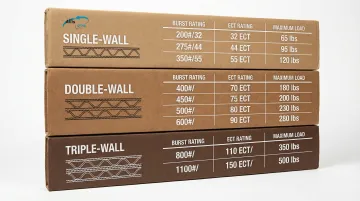
Single-wall corrugated handles most consumer goods. Double-wall is appropriate for heavier or fragile items. Triple-wall approaches pallet-grade durability for industrial shipments.
Product Type and Special Handling Requirements
Fragile, irregularly shaped, and high-value items require additional engineering considerations:
Fragile items need closer interior-to-product fit, with double-boxing recommended for extremely fragile goods. Heavier-wall corrugated is essential for dense or sharp-edged products that could puncture from inside.
Industry-specific needs:
- Electronics often require anti-static or foam-insert-compatible boxes
- Medical and pharmaceutical products may need tamper-evident or temperature-stable packaging
- Food and beverage shipments may require moisture-resistant corrugated, as moisture can reduce compression strength by up to 50%
Shipping Volume and Procurement Strategy
Businesses shipping at consistent volume benefit from standardizing to a smaller set of box sizes rather than buying ad-hoc. The benefits are practical:
- Reduced per-unit cost through volume pricing
- Simplified warehouse inventory management
- Prevention of production delays caused by box stockouts
Sourcing from a supplier with large in-stock inventory and just-in-time delivery capability reduces carrying costs while maintaining operational continuity.
Carrier and Shipping Method Compatibility
Major carriers enforce specific requirements that affect box selection:
Weight limits per box:
- UPS and FedEx: 150 lbs maximum
- USPS: 70 lbs maximum
DIM weight divisors also vary by carrier — UPS and FedEx commercial use 139, while USPS commercial parcels use 166. Choosing a box without accounting for both weight limits and DIM divisors can result in surcharges or claims rejection.
Carriers may refuse liability for damage if boxes don't meet certification standards or if used boxes show prior wear.
LTL freight shipments have additional requirements around stacking and load-bearing capacity, making triple-wall or pallet-integrated packaging more relevant for distribution and manufacturing shippers.
Sustainability and Material Compliance
Corrugated is among the most recycled packaging materials, with 69-74% of cardboard recycled in 2024 — approximately 46 million tons of paper and paperboard. This high recovery rate makes corrugated a viable choice for businesses with sustainability commitments.
Certain regulated industries (medical, pharmaceutical, food contact) may require specific material certifications or documentation from box suppliers. Verify these requirements during sourcing to ensure compliance.
Common Shipping Box Mistakes That Cost Businesses Money
Three mistakes account for most preventable shipping losses — and each one looks like a small decision until the costs add up.
Defaulting to Oversized Boxes
A box just 2 inches too large in each dimension can increase shipping costs by 15–25% through DIM weight pricing alone. Multiply that across hundreds or thousands of shipments monthly, and the impact compounds fast. Oversized boxes also require more void fill, and products that shift in transit are far more likely to arrive damaged.
Reusing Previously Shipped Boxes
Each trip through the supply chain weakens corrugated walls. Moisture, compression, and handling degrade structural integrity — and moisture exposure can reduce compression strength by up to 50%, even when the box looks dry. Beyond the damage risk, used boxes may not meet carrier certification requirements and can void damage claims outright. The savings from reuse rarely hold up.
Choosing Boxes by Price Per Unit Alone
A cheaper, under-rated box that fails in transit costs far more than the price difference once damage claims, returns, and customer service hours are factored in. With 51% of consumers unlikely to repurchase after receiving damaged goods, the real cost extends well beyond replacing a single shipment. Matching box strength rating to product weight and fragility isn't optional — it's where the math actually works in your favor.
How Alliance Packaging Group Can Help
Alliance Packaging Group is a single-source packaging partner for businesses that need reliable access to a wide range of box sizes and shipping supplies without managing multiple vendors or dealing with stockout delays.
With over 1,000 box sizes available for immediate shipment nationwide and factory-direct pricing that bypasses distributor markups, Alliance Packaging Group makes it practical for manufacturing, distribution, warehousing, and e-commerce operations to standardize box procurement and reduce per-unit packaging costs.
What sets them apart:
- Full wall-type coverage — single, double, and triple-wall — plus ECT ratings from 32 ECT standard to 90 ECT industrial-grade
- Over 10,000 packaging and industrial products available
- Factory-direct pricing through direct manufacturer relationships
- Nationwide just-in-time delivery programs
- Complete single-source packaging and material handling solutions
- WBENC-certified Women's Business Enterprise
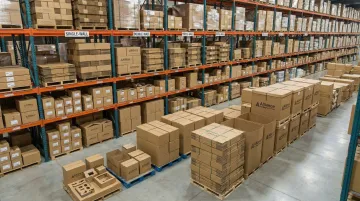
That inventory also covers specialized configurations — telescoping boxes, mailers, and industry-specific solutions for electronics, food and beverage, and medical applications — so businesses across sectors can source everything from a single supplier.
Conclusion
Selecting the right shipping box requires matching box size, wall strength, and material rating to specific product requirements, shipping volume, and carrier specifications—not simply choosing the most common or cheapest option available.
Box selection isn't a one-time decision. As product lines expand, shipping volumes shift, and carrier contracts change, your packaging specs should be revisited regularly to stay aligned with actual needs.
Working with a supplier that stocks a broad range of sizes and offers volume pricing makes that ongoing adjustment straightforward. Alliance Packaging Group carries more than 1,000 box sizes available for immediate shipment, along with factory-direct pricing—so optimizing your packaging setup doesn't have to mean starting from scratch every time requirements change.
Frequently Asked Questions
What are the best boxes for shipping?
New, double-wall corrugated boxes with an appropriate ECT or Mullen burst rating are the most reliable choice for most commercial shipping. The right box depends on weight, fragility, and carrier requirements: a 44 ECT double-wall box works well for fragile items under 95 lbs, while triple-wall 90 ECT boxes suit industrial shipments.
What is the least expensive way to ship boxes?
Right-sizing boxes to minimize dimensional weight charges, standardizing sizes for volume discounts, and sourcing from factory-direct suppliers are the primary levers for reducing per-shipment costs. Oversized boxes can increase shipping costs by 15-25% through DIM weight pricing alone, making proper sizing the most effective cost control measure.
Is it cheaper to use my own box or a carrier-provided box?
Carrier-provided flat-rate boxes work well for small, heavy items that exceed DIM weight thresholds. For businesses shipping at volume, purchasing corrugated boxes from a wholesale or factory-direct supplier typically costs less, particularly through volume pricing programs.
What is the difference between ECT and burst test ratings on shipping boxes?
ECT (Edge Crush Test) measures a box's resistance to top-to-bottom compression and stacking loads, while the Mullen Burst Test measures the box wall's resistance to puncture. ECT is the more commonly referenced standard today for most shipping applications, particularly for palletized shipments and warehouse storage.
How do I know what size box to use for shipping?
Interior box dimensions should allow for the product plus approximately 2 inches of cushioning on all sides. The box should be snug enough to prevent product movement without compressing contents or causing the box to bulge, which could trigger dimensional weight surcharges or handling fees.
Can I reuse shipping boxes for my business shipments?
Reusing boxes for commercial shipping is not recommended. Compression, moisture, and prior handling can reduce structural strength by up to 50%, and most carriers require new, manufacturer-certified corrugated boxes to honor damage claims.