Introduction
Modern passenger vehicles contain between 1.5 km and 3 km of wiring harness—over a mile of potential failure points where unprotected connections can lead to shorts, electrical fires, or complete system failures. A single poorly wrapped splice or deteriorating tape wrap in your engine bay can turn into costly repairs, failed electronics, or a fire hazard. Automotive electrical tape isn't just a convenience item; it's a critical safety component that protects every connection from heat, moisture, vibration, and abrasion.
The difference between automotive-grade tape and standard household electrical tape is substantial. Automotive tapes must meet rigorous standards like UL 510 and CSA C22.2 No. 197, with temperature ratings spanning from -40°C in winter cold to 125°C or higher in engine compartments.
They're engineered to resist engine oil, coolant, brake fluid, and gasoline—environments where standard tape fails within weeks.
Knowing which tape meets those standards—and why it matters—is what separates a reliable repair from one that fails at the worst moment. This guide covers the top automotive electrical tape recommendations, the key types you need to know, and how to match tape specifications to your application. Whether you're a DIY mechanic repairing a harness or a procurement manager sourcing for a fleet operation, the right tape starts with understanding the specs.
Key Takeaways
- Automotive electrical tape withstands heat, oil, vibration, and moisture—household tape fails in vehicle environments
- Vinyl/PVC handles general insulation, cloth tape bundles wire harnesses, and self-fusing silicone handles extreme heat
- Engine bay wiring requires tapes rated above 125°C; harness bundling needs cloth tapes for abrasion resistance
- Strong performers include 3M Super 33+, 3M Temflex 1700, Tesa 51608, and 3M Scotch 70 silicone tape
- Match tape to application first—using the wrong type causes failures within months, regardless of brand
What Is Automotive Electrical Tape?
Automotive electrical tape is a pressure-sensitive adhesive tape engineered specifically for vehicle environments. Its core functions include insulating electrical connections, bundling wire harnesses, and protecting against heat, abrasion, automotive fluids, and constant vibration. Unlike standard electrical tape, automotive-grade products meet stringent industry certifications and performance thresholds.
How automotive tape differs from standard electrical tape:
- Operates from -40°C to 125°C or higher; standard tape maxes out at 60–80°C
- Meets UL 510, CSA C22.2 No. 197, and OEM specs like Ford ES-AC3T-1A303-AA
- Resists immersion in engine oil, brake fluid, coolant, and gasoline
- Uses specialized vinyl, polyester cloth, or silicone backings—not generic PVC
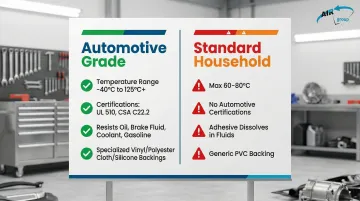
Standard household tape fails in automotive applications because its adhesive "oozes" or dries out above 60–80°C, causing the tape to unravel (flagging). In cold weather, it becomes brittle and cracks. Exposure to oil or gasoline dissolves the adhesive or degrades the backing entirely.
Vinyl / PVC Tape
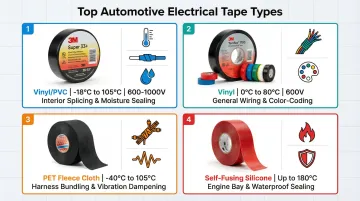
Vinyl electrical tape is the most common type—flexible, moisture-resistant, and rated for general-purpose insulation. Voltage ratings typically run 600V to 1,000V, with temperature range from -18°C to 105°C depending on whether the tape is UL 510 or CSA certified.
Best applications: interior wiring, splices, terminals, and underdash work where extreme heat isn't a concern.
Cloth and Fabric Harness Tape
Cloth tapes use woven or non-woven backings and are the standard choice for wire harness bundling in OEM automotive manufacturing. They wrap tightly around wire bundles without leaving adhesive residue—ideal for clean factory-line assembly.
Key properties:
- Conforms easily to irregular bundle shapes
- Dampens vibration noise in the cabin
- Secures through tension and overlap, not sticky adhesion
Self-Fusing / Silicone Tape
Self-fusing silicone tape is built for high-heat and waterproof applications. It bonds to itself—no adhesive—creating a sealed, flexible wrap rated for continuous operation at 180°C (Class H).
It's the right choice for engine compartment wiring, fluid-exposed connections, and anywhere a hermetic seal matters. Resists oil, coolant, and most automotive fluids without degrading.
Top Automotive Electrical Tape Recommendations for Vehicle Wiring
The products below were selected based on temperature performance, adhesion quality, industry recognition, and suitability across a range of automotive applications—from DIY repairs to OEM wire harness assembly. Each tape addresses specific environmental zones within the vehicle.
3M Super 33+ Vinyl Electrical Tape
3M Super 33+ is one of the most widely recognized premium vinyl electrical tapes, trusted by automotive technicians for decades. It's used for wire insulation, splicing, and moisture sealing in both professional and DIY settings. Its standout differentiators include higher continuous-use temperature ratings than standard vinyl tape, excellent cold-weather flexibility down to -18°C, strong conformability to irregular surfaces, and UL Listing. 3M is a key manufacturing partner known for quality standards in automotive applications.
| Specification | Details |
|---|---|
| Voltage Rating | 600V (UL 510) / 1000V (CSA C22.2 No. 197) |
| Temperature Range | -18°C to 105°C (CSA rating) |
| Thickness | 7 mils (0.178 mm) |
| Best Use Case | Interior and underdash wiring, splicing, moisture sealing on wire terminals and connectors |
| Standout Feature | Superior elongation and self-fusing backing edges provide a tight, conformable wrap that resists unraveling over time |
3M Temflex 1700 Multi-Purpose Vinyl Electrical Tape
3M Temflex 1700 is the value-tier vinyl option within the 3M lineup—widely used for general automotive wiring repairs, secondary insulation, and temporary protection during installation. It delivers reliable insulation at a competitive price point, making it well-suited for high-volume repair shops and fleet maintenance operations handling standard vehicle wiring tasks that don't require extreme heat resistance.
| Specification | Details |
|---|---|
| Voltage Rating | 600V (UL 510) |
| Temperature Range | 0°C to 80°C |
| Thickness | 7 mils (0.18 mm) |
| Best Use Case | General-purpose wire insulation, color-coding harness circuits, bundling light wire groups in low-heat zones |
| Standout Feature | Cost-effective alternative for high-volume automotive repair shops or fleet maintenance operations without sacrificing basic insulation integrity |
Tesa 51608 Automotive Cloth Tape
Tesa 51608 is a premium non-woven fleece-backed automotive tape widely used in European and global OEM wire harness applications. Recognized for its hand-tearability, soft texture, and vibration-dampening properties, this tape is a go-to choice for OEM-specification harness wrapping where tactile quietness and durability are required. The fleece backing absorbs vibration and reduces wire noise, conforming exceptionally well to irregular harness shapes.
| Specification | Details |
|---|---|
| Backing Material | PET fleece (non-woven) |
| Temperature Range | -40°C to 105°C |
| Tearability | Hand-tearable for easy manual application |
| Best Use Case | Wire harness wrapping in door panels, engine compartment looms, and any application requiring vibration absorption and quiet operation |
| Standout Feature | Fleece backing and conformable structure make it among the preferred choices for European OEM automotive wire harness standards |
3M Scotch 70 Self-Fusing Silicone Tape
3M Scotch 70 is the top pick for high-heat and waterproof applications. It's a self-fusing silicone tape with no adhesive; it bonds only to itself, creating a solid, seamless rubber wrap. Rated for continuous operation at 180°C and completely waterproof when applied correctly, it resists automotive fluids including oil and coolant—making it the go-to option for engine bay wiring, battery terminals, and any connection exposed to harsh under-hood conditions.
| Specification | Details |
|---|---|
| Temperature Rating | Continuous operation at 180°C (Class H) |
| Dielectric Strength | 34 kV/mm (approx. 875 V/mil) |
| Thickness | 12 mils (0.3 mm) |
| Best Use Case | Engine bay wire protection, battery terminal sealing, and any connection exposed to moisture, high heat, or corrosive fluids |
| Standout Feature | Self-fusing chemistry creates an adhesive-free, void-free seal that outlasts conventional tape wraps in extreme under-hood conditions |
How We Chose the Best Automotive Electrical Tapes
We assessed products based on temperature and voltage ratings, backing material and abrasion resistance, adhesion quality, OEM or UL certification status, and suitability for both DIY and professional automotive applications. The most common mistake buyers make is selecting tape based on price alone without verifying temperature ratings for their specific vehicle environment—a $3 roll of household tape can cause a $300 repair when it fails in the engine bay.
Performance requirements vary significantly by application:
- Engine-bay wiring requires Class C or higher ratings, meaning temperature resistance above 125°C
- Wire harness bundling calls for cloth-backed tapes — they outperform vinyl on abrasion resistance and noise damping
- Waterproofing connections demands self-fusing or mastic tapes, which create a hermetic seal; standard vinyl tape resists moisture but won't seal it out
Technical performance criteria only tell part of the story. Brand reputation and supply reliability also factored into these selections — tapes from established manufacturers like 3M come with documented specifications, consistent quality control, and accessible supply chains for ongoing procurement. Products meeting UL 510, CSA C22.2 No. 197, or OEM specifications like Ford ES-AC3T-1A303-AA provide verifiable performance data rather than marketing claims.
Conclusion
No single automotive electrical tape suits every application—the right choice depends on where the tape is being used, the heat exposure it will face, and whether insulation, bundling, or waterproofing is the primary goal. For engine bay wiring, silicone tape rated to 180°C is essential. For harness bundling in doors or the cabin, cloth tapes like Tesa 51608 provide the conformability and noise damping OEMs require. For general splicing and insulation, premium vinyl like 3M Super 33+ delivers reliable performance across temperature extremes.
For procurement managers and shop operators, matching tape specifications to application requirements — rather than defaulting to the cheapest option — is straightforward risk management. A roll of automotive-grade tape costs a few dollars more; rewiring a damaged harness costs far more in labor and downtime.
For businesses sourcing automotive tapes and industrial supplies at volume, Alliance Packaging Group offers factory-direct pricing on products from leading manufacturers including 3M, with nationwide just-in-time delivery to keep operations running without supply gaps. Reach the team at 770-309-1012 or sales@apg-go.com to discuss volume pricing and availability.
Frequently Asked Questions
What's the best electrical tape for automotive use?
For most automotive wiring tasks, 3M Super 33+ is the industry benchmark for premium vinyl tape, offering a -18°C to 105°C range with excellent conformability. Cloth harness tapes like Tesa 51608 are preferred for OEM-style wire bundling—the best choice depends on your specific application and environment.
What kind of electrical tape should I use to protect wires from engine heat?
For engine bay wiring, use high-temperature vinyl tape or self-fusing silicone tape like 3M Scotch 70. Look for tapes rated above 125°C (257°F) and verify resistance to oil, coolant, and fuel vapors.
Is electrical tape abrasion resistant?
Standard vinyl electrical tape offers only basic abrasion resistance. Cloth and fabric harness tapes—along with thicker PVC-backed options—are built for abrasion protection wherever wires are routed near metal edges or abrasive surfaces.
Can I use regular electrical tape on car wiring?
Standard household electrical tape is not recommended for automotive use—it typically lacks the temperature rating, adhesive durability, and fluid resistance needed in vehicle environments. It may dry out, shrink, or lose adhesion over time when exposed to engine heat or moisture.
What temperature rating do I need for automotive electrical tape?
Interior/cabin wiring typically requires tape rated to at least 60–80°C, underdash and general wiring to 90°C, and engine bay or under-hood applications to 125°C or higher. Always check the manufacturer's rated temperature range before applying.
What is wire harness tape used for in vehicles?
Wire harness tape bundles, protects, and routes groups of wires throughout a vehicle. It provides abrasion resistance, noise dampening, and shape retention for cable looms in doors, the engine compartment, dashboard, and chassis, and is a standard component in OEM vehicle manufacturing.