
Introduction
Stand in any cosmetics aisle and watch what happens: shoppers reach for the bottle with the label that catches their eye first. In the beauty industry, your label isn't just decoration. It's the silent salesperson driving purchase decisions in the three seconds a customer spends scanning the shelf. For cosmetic brands, label choice directly impacts revenue.
Many brands discover label failures only after launch. Adhesive gives way on oily serum bottles, edges peel in humid bathrooms, ink fades under bathroom lighting. Add regulatory compliance gaps to that list, and you're looking at costly recalls, returns, reprints, and lost shelf presence that erode brand trust long-term.
This guide covers the materials, adhesives, finishes, and compliance factors that determine whether a cosmetic label holds up — and how to choose the right combination for your product line.
Key Takeaways
- Self-adhesive labels dominate cosmetic packaging due to fast application and design flexibility
- Film materials (BOPP, vinyl, PET) outperform paper in moisture and high-contact environments
- Adhesive choice depends on container surface type, product chemistry, and storage temperature range
- Evaluate container shape, environmental exposure, brand aesthetic, and FDA compliance before finalizing a label spec
- Verify supplier lead times and minimum order quantities early — label stock shortages delay entire production runs
What Are Self-Adhesive Labels for Cosmetic Products?
Self-adhesive labels—also called pressure-sensitive labels—feature a pre-applied adhesive layer that bonds to surfaces with light pressure, making them ideal for high-speed cosmetic production lines and the diverse container types beauty brands use daily.
Cosmetics rely on self-adhesive labels because they work across glass, plastic, and metal containers. They accommodate custom shapes, premium finishes, and automated labeling equipment. Pressure-sensitive labels are the dominant technology for consumer packaged goods, including cosmetics, due to this versatility.
Core Components of a Self-Adhesive Label
Every self-adhesive label has three layers:
- Face stock - The visible printed surface where your brand lives
- Adhesive layer - Determines bond strength and which surfaces it sticks to
- Release liner - The backing that protects the adhesive until application
The interaction between face stock and adhesive determines performance. A mismatch, like paper face stock with standard adhesive on a squeezable tube, causes the most common cosmetic label failures: peeling, bubbling, or complete detachment.
Understanding these components helps clarify why label type selection matters as much as adhesive choice.
Types of Self-Adhesive Labels Used in Cosmetics
Cosmetic labels fall into three main categories:
- Film-based labels (BOPP, vinyl, PET/polyester) - Moisture-resistant, durable, conformable
- Paper labels - Cost-effective, artisanal aesthetic, requires protective coating for humid environments
- Clear/no-label look labels - Transparent films that create a printed-on appearance
Film labels dominate bathroom and shower products where moisture exposure is constant. Paper works well for dry-environment items like bar soaps or scrubs in sealed jars, where a craft aesthetic adds perceived value.
Best Self-Adhesive Label Materials for Cosmetic Products
Material choice determines whether your label survives bathroom humidity, oil exposure, and daily handling—and whether it signals the right brand tier to customers. Each material below suits a different product environment and brand positioning.
BOPP (Biaxially Oriented Polypropylene)
BOPP is the most widely used film material in commercial cosmetic labeling due to its combination of moisture resistance, print clarity, and tear-proof durability. It bonds reliably to glass, plastic, and metal—making it versatile enough for most cosmetic packaging formats.
BOPP comes in three variants:
- White BOPP - Opaque background for bold color reproduction
- Clear BOPP - Creates the "no-label look" for minimalist aesthetics
- Metallic BOPP - Reflective luxury finish for premium positioning
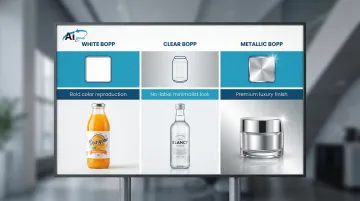
That clear variant has become particularly relevant for modern packaging trends. Clear BOPP delivers the printed-on appearance trending across skincare and serum packaging—making it the top pick for serums, toners, and cleansers in transparent glass or plastic containers where the product itself becomes part of the visual appeal.
Vinyl Labels
Vinyl labels are thicker and more conformable than BOPP, making them ideal for squeezable tubes, rounded containers, and products experiencing daily mechanical stress—squeezing, pumping, or gripping.
Their strong oil and solvent resistance makes them reliable for body oils, lotions, and multi-use personal care products. Vinyl excels on semi-squeezable bottles and tubes where standard films would wrinkle or lift.
Polyester (PET) Labels
Think sunscreen left in a beach bag, skincare stored in a hot car, or active-ingredient formulas that stress standard films. These are the conditions PET labels are built for.
PET provides dimensional stability, scratch resistance, and heat resistance up to 150°C, maintaining performance through heat fluctuations during shipping and storage. If your product sits in hot cars, beach bags, or direct sunlight, PET is your material.
Paper Labels
Paper labels suit dry-environment cosmetics where an artisanal, eco-friendly aesthetic is a brand priority:
- Organic bar soaps
- Body scrubs in sealed jars
- Aromatherapy products
- Gift sets in controlled environments
One important caveat: Paper without lamination or aqueous coating degrades in humid environments. Never use unprotected paper for shower or bath products.
Lamination options extend paper durability:
- Gloss lamination - Adds shine and moisture barrier
- Matte lamination - Refined finish with humidity protection
- Soft-touch lamination - Velvety texture for premium feel
Key Factors to Consider When Choosing Cosmetic Self-Adhesive Labels
Material choice is just one piece of the puzzle. The right label comes from evaluating container type, use environment, brand positioning, compliance requirements, and production method together — each variable affects the others.
Container Type and Surface Compatibility
Container shape and material directly dictate adhesive and face stock requirements:
- Rigid flat glass surfaces - Allow wide range of materials
- Squeezable tubes or curved bottles - Require conformable films with high initial tack
- Soft-touch and matte-finished containers - Need aggressive permanent adhesives to achieve full bond without lifting
Container surface energy (how well adhesives bond to a surface) varies by material. PE, PP, and coated containers have low surface energy and require specifically formulated adhesives. Ask your supplier: "Has this adhesive been tested for compatibility with [your specific container material]?" Request surface energy compatibility testing before production runs.
Environmental Exposure and Adhesive Strength
Cosmetic products in bathroom environments face continuous moisture, steam, and temperature cycling. These conditions degrade standard adhesives, causing peeling, bubbling, or label slide.
Moisture resistance levels and chemical exposure:
- Moisture-resistant - Withstands occasional splashes and humidity
- Waterproof - Maintains bond strength under constant water exposure or submersion
- Chemical exposure - Products with high concentrations of alcohol, oils, or active acids require adhesives with solvent and chemical resistance; these substances can migrate under the label and break the bond from the inside
Brand Aesthetic and Finish Selection
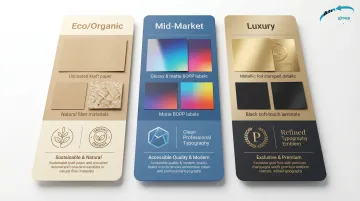
Label material and finish must communicate your intended brand tier. The wrong pairing undermines positioning even if the label performs technically — a luxury serum in a basic gloss label reads as mid-market regardless of the $150 price point.
| Brand Tier | Recommended Materials | Visual Goal |
|---|---|---|
| Luxury | Metallic BOPP, foil-stamped accents, soft-touch laminates | Premium tactile feel, high perceived value |
| Mid-market | Gloss or matte BOPP | Clean, professional, vibrant color reproduction |
| Eco/organic | Uncoated or kraft paper | Natural texture, minimalist presentation |
Regulatory Compliance and Label Space
All cosmetics distributed in the U.S. must comply with the Federal Food, Drug and Cosmetic Act (FD&C) and Fair Packaging and Labeling Act (FPLA).
Required label elements:
- Product identity and intended use
- Net weight or volume
- Manufacturer name and address
- Ingredient listing in order of predominance (using INCI names)
- All in legible type size
When label space is limited (compacts, lip balms, travel-size containers), consider:
- Extended content labels (ECLs) - Multi-panel labels that unfold to reveal additional information
- Piggyback labels - Two-layer labels where the top layer peels back to reveal more text
- NFC tags - Digital labels customers scan for full ingredient and usage information
Application Method: Hand vs. Automated
The choice between manual hand-application and automated labeling machines affects which label format, liner type, and roll specifications you need.
Automated lines require:
- Labels wound on cores with consistent unwind tension
- Specific core sizes (typically 3 inches)
- Maximum outer diameter limits (often 12 inches)
- Correct unwind direction for machine intake
Hand-application allows:
- More flexibility in label format
- Sheet or roll formats
- No specific core requirements
Mismatched label specs for an automated line cause costly downtime and application errors. U.S. manufacturers lose an average of $1,174,000 annually due to labeling equipment issues.
Finishes, Embellishments, and Compliance Must-Knows
Once material is chosen, surface finishes and embellishments determine whether your label reads as mass-market or premium. Layering these effects correctly creates a label that both performs and sells.
Protective Finishes
Four primary finish types serve both aesthetic and protective roles:
Gloss
- Bright and polished appearance
- Boosts color vibrancy
- Adds light moisture protection
- Best for: Bold, colorful brands
Matte
- Refined and modern
- Reduces glare and fingerprints
- Aligns with minimalist brands
- Best for: Clean beauty, luxury skincare
Soft-touch lamination
- Velvety tactile finish
- Popular in luxury skincare
- Creates premium unboxing experience
- Best for: High-end serums, premium moisturizers
UV coating
- Adds hardness and scratch resistance
- Protects against frequent handling
- Prevents fading under bathroom lighting
- Best for: Daily-use products, body care
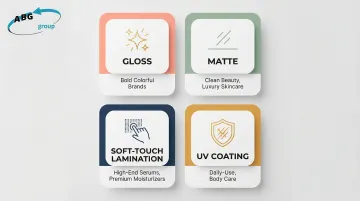
The right finish also keeps mandatory text legible over time — critical once embellishments enter the picture.
Embellishment Options for Premium Cosmetics
Foil stamping
- Metallic reflective accents
- Luxury positioning
- Catches light on shelf
- Common colors: Gold, silver, rose gold, holographic
Embossing
- Dimensional texture
- Tactile brand differentiation
- Adds perceived value
- Works well with minimalist designs
Rotary screen printing
- Super-opaque whites for no-label look
- Simulated metallic effects
- Ultra-fine text down to 2-point for small containers
- Essential for lip balms and compacts with limited space
These embellishments layer on top of your chosen label material and finish, creating depth and contrast that helps products stand out at retail. One important caveat: no finish or embellishment should reduce the legibility of required regulatory text — which brings us to compliance.
FDA Compliance Quick Reference
Every U.S. cosmetic label must include these mandatory elements under the FD&C Act and FPLA:
- Product identity - What it is (serum, moisturizer, cleanser)
- Net quantity of contents - Weight or volume in both U.S. and metric units
- Manufacturer or distributor name and address - Full business location
- Ingredient declaration - INCI names in descending order of predominance
- Required warning statements - Any applicable safety warnings
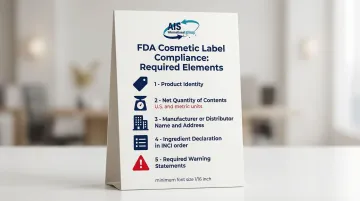
Font size requirements apply: generally 1/16 inch in height, with 1/32 inch permitted for small packages (labeling surface under 12 square inches).
If your package qualifies as a small package (under 12 square inches of labeling surface), confirm which elements may use the reduced 1/32-inch type — and which must stay at 1/16 inch regardless.
How Alliance Packaging Group Can Help
Alliance Packaging Group is a single-source packaging partner with over 10,000 packaging and industrial products in stock. For cosmetic brands, this means access to a wide range of label materials, adhesives, and packaging supplies without managing multiple vendors—simplifying procurement and reducing lead times.
Their nationwide just-in-time delivery programs ensure cosmetic brands can replenish label inventory on demand. For seasonal launches, reformulations, or scale-up production runs, label supply disruptions directly impact fulfillment timelines—on-demand replenishment eliminates that risk.
Key reasons cosmetic brands choose Alliance Packaging Group:
- Prices factory-direct, consistently below industry standard
- Consolidates all label and packaging needs under one vendor relationship
- WBENC-certified women-owned business, supporting supplier diversity programs since 2011
- Matches cosmetic brands with the right adhesive, face stock, and finish for their specific product and production environment
Beyond inventory, their technical support team consults directly on adhesive types, face stock materials, and finishes. Volume pricing scales from small batch testing to full production runs, so brands aren't locked into minimums that don't fit their stage of growth.
Contact Alliance Packaging Group:
- Email: sales@apg-go.com
- Phone: 770-309-1012
Conclusion
Choosing the right self-adhesive label for a cosmetic product means matching every spec — material, adhesive, finish, and compliance — to your specific product, container, environment, and brand. Get one element wrong, and the whole package suffers.
A mismatched label undermines shelf appeal and durability no matter how premium the formula inside is:
- A luxury serum with a peeling label reads as cheap
- A clean beauty brand with non-compliant ingredient listings faces regulatory action
- A water-resistant product with a paper label fails at the first wet surface it touches
Those consequences are avoidable — but only if label specs keep pace with the product. Revisit your label requirements whenever a formulation, container, or production volume changes. A packaging supplier with broad label inventory and material knowledge, like Alliance Packaging Group, can help you identify the right spec before a misprint or field failure does.
Frequently Asked Questions
How to label cosmetic products?
Cosmetic products must meet FDA requirements under the FD&C Act and FPLA, covering product identity, net contents, manufacturer information, and ingredient declaration. Self-adhesive labels are applied manually or via automated equipment depending on production volume and container surface.
What are permanent adhesive labels?
Permanent adhesive labels form a strong, lasting bond with the container surface that is not intended for removal, unlike repositionable labels, which are designed to come off cleanly. They're the standard choice for cosmetics where label integrity under moisture and handling is essential.
What are the 4 types of labeling?
The four common label types are pressure-sensitive (self-adhesive), cut-and-stack (glue-applied), shrink sleeve, and in-mold labels. Pressure-sensitive is the dominant format in cosmetics due to its versatility and compatibility with premium finishes, plus straightforward application at any production scale.
What is the best material for self-adhesive cosmetic labels?
BOPP and vinyl are the top materials for most cosmetic applications due to their moisture resistance, print quality, and surface compatibility. PET suits extreme-durability needs like sunscreens and outdoor products, while paper works only for dry, eco-focused products with protective lamination.
Are self-adhesive labels waterproof for bathroom beauty products?
Film-based labels — BOPP, vinyl, or PET — with moisture-resistant adhesives hold up well in bathrooms and showers. Standard paper labels without lamination are not suitable for high-humidity environments and will degrade quickly.
How do I prevent cosmetic labels from peeling off curved or squeezable containers?
Use conformable film materials like vinyl or polyolefin paired with high-tack, shear-resistant permanent adhesives. Always test on the actual container before full production runs — adhesion can vary significantly under squeezing, moisture, and temperature changes.