Introduction
When a cable splice fails during a production run or a maintenance crew discovers insulation breakdown during a routine inspection, the root cause typically traces back to one decision: choosing the wrong electrical tape.
In manufacturing, warehousing, and industrial environments, the wrong roll can halt a production line, trigger compliance inspections, or cause unplanned downtime that spreads through an entire facility. The stakes extend well beyond simple adhesion.
This guide is written for industrial professionals who need to get the tape decision right the first time. The following sections break down tape types, selection criteria, and application contexts — connecting each directly to safety, compliance, and operational continuity. Whether you're specifying materials for medium-voltage cable work or managing consumable inventory across a distribution center, you'll find the framework to choose confidently.
Key Takeaways
- Electrical tape insulates, seals, and protects wiring in electrical systems across industrial environments
- Main types — vinyl (PVC), rubber/self-amalgamating, silicone, and mastic — each target different voltage and environmental demands
- Selection depends on voltage rating, temperature range, moisture/chemical exposure, and application type
- Industrial environments often require UL, RoHS, or MSHA compliance — verify certifications before ordering
- Choosing the right tape from a reliable supplier prevents rework and reduces costly downtime
What Is Electrical Tape?
Electrical tape is a pressure-sensitive adhesive tape designed to insulate, protect, and seal electrical conductors and connection points. Manufacturing facilities, utilities, construction sites, and distribution centers rely on it daily to maintain electrical system integrity and worker safety.
- Vinyl (PVC): General-purpose insulation rated up to 600V
- Rubber/Self-Amalgamating: High-voltage splicing applications up to 69kV
- Silicone: Extreme heat and arc flash resistance
- Mastic Sealing: Moisture exclusion and void-filling around irregular shapes
- Specialty Tapes: Arc-proof, friction/cotton, and mining-grade variants
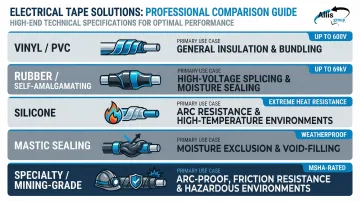
Choosing the wrong tape for the application isn't just an efficiency problem — it's a safety risk. The sections below break down each type by voltage rating, temperature range, and use case so you can match tape to task with confidence.
Common Types of Electrical Tape for Industrial Use
Industrial environments demand more than a generic roll. The tape type must match the voltage class, environment, and mechanical requirements of the application.
Vinyl (PVC) Electrical Tape
Vinyl tape is the most widely used general-purpose insulating tape, available in multiple grades:
Voltage and Temperature:
- Rated for primary electrical insulation up to 600V
- Standard UL 510 tapes operate at 80°C (176°F)
- Premium grades like 3M Scotch Super 33+ and Super 88 operate continuously up to 105°C (221°F)
Cold-Weather Performance: Professional-grade vinyl tapes are engineered for installation down to -18°C (0°F), maintaining conformability and adhesion in outdoor or cold-storage conditions where standard tapes fail.
Best Applications:
- Primary insulation on low-voltage electrical systems
- Bundling and harnessing wire groups
- Color-coded phase identification
- Indoor and outdoor electrical work
Limitations: Vinyl tape is not suited for high-voltage splicing or direct moisture immersion without additional sealing layers. For applications exceeding 600V or requiring watertight seals, rubber or mastic tapes are required.
Rubber and Self-Amalgamating Tape
Rubber splicing tape is the go-to for medium- and high-voltage applications where vinyl tape would fail.
Voltage Capacity: EPR-based rubber tapes are rated for primary insulation on splices from 600V up to 69,000V (69kV).
Mechanical Properties:
- Self-bonds without adhesive, creating a seamless, void-free insulating layer
- Stretches up to 1000% elongation, conforming tightly to irregular shapes
- Resists moisture infiltration in cable joints and terminations
Standards: Rubber splicing tapes must meet IEEE Std 404 requirements for cable joints and splices, establishing testing and rating requirements for shielded cable applications.
Best Applications:
- Utility and power distribution cable splicing
- Industrial medium-voltage cable joints
- Underground and outdoor cable terminations
- Applications requiring long-term cable joint reliability
Silicone Rubber Tape
Self-fusing silicone tape is engineered for high-heat, high-voltage environments where standard tapes would degrade or fail.
Temperature Range: Silicone tapes operate continuously at 180°C (Class H rating), with some formulations withstanding -60°C to 260°C (-65°F to 500°F).
Arc and Tracking Resistance: Silicone tape's arc-resistance property is critical in scenarios where cable-to-cable proximity creates risk of electrical faults. Tested to ASTM D-495, many formulations exceed 1 minute of arc resistance with dielectric strength around 875 V/mil.
Best Applications:
- High-temperature equipment and cable terminations
- Bus bar insulation and protection
- Applications requiring arc and tracking resistance
- Irregular shapes requiring tight conformability
Mastic Sealing Tape
Mastic tape is designed for moisture exclusion and padding rather than primary electrical insulation.
Construction: Mastic tapes are self-fusing, rubber-based insulating compounds, often laminated to a vinyl or rubber backing. They are thicker than standard insulating tape and create a moldable, conformable seal.
Environmental Protection: Mastic tapes seal splice points, pad sharp edges, and weatherproof connections against UV, acids, alkalis, and corrosion.
Standards: Mastic tapes are essential components in splice kits designed to meet IEEE 404 watertight requirements and UL 486D for sealed wire connector systems in wet locations.
Best Applications:
- Outdoor cable protection and sealing
- Underground splice enclosures
- Moisture or chemical exposure environments
- Padding sharp edges on cable terminations
Specialty Tapes (Arc-Proof, Friction, Mining-Grade)
Specialty tapes address fault conditions, extreme heat, and regulatory environments that standard vinyl or rubber tapes aren't rated for.
Arc-Proofing Tape: Uses intumescent elastomer that expands under extreme heat, creating a protective barrier around cables during fault conditions.
Friction/Cotton Tape: Varnished cambric (cotton cloth coated in insulating varnish) is mechanically tough and used for overwrapping motor leads and bus bars. It allows for clean re-entry without fusing.
Mining-Grade Tape: MSHA-approved tapes (30 CFR Part 18) offer abrasion, oil, and flame resistance for harsh underground or heavy-industrial use. Verify MSHA approval numbers directly on the product datasheet before specifying for underground or mining applications.
Key Factors to Consider When Choosing the Right Electrical Tape
Tape selection comes down to six technical and environmental factors. Get them right and you reduce failure risk, pass inspections, and cut re-work costs. Get them wrong and even a well-priced tape becomes a liability.
Voltage Rating
Every electrical tape carries a voltage rating that determines the maximum system voltage it can safely insulate.
Voltage Ratings by Tape Type:
| Tape Type | Dielectric Strength | Voltage Rating |
|---|---|---|
| Vinyl (PVC) | ~1,150 V/mil | Up to 600V |
| Rubber (EPR) | ~800 V/mil | Up to 69kV |
| Silicone | ~875 V/mil | High-temp overwrap |
Using an under-rated tape in a higher-voltage application creates serious insulation failure risk. OSHA 29 CFR 1910.303(c)(3)(i) mandates that all splices be covered with insulation "equivalent to that of the conductors". Matching the tape's dielectric strength to the system voltage must come first in any selection decision.
Temperature Range
Operating temperature directly impacts tape performance. Standard vinyl tapes lose conformability and adhesion at low temperatures, while silicone and high-grade rubber tapes maintain performance across wider ranges.
Temperature Performance by Tape Type:
| Tape Type | Min Temp | Max Temp |
|---|---|---|
| Vinyl (Standard) | 0°C (32°F) | 80°C (176°F) |
| Vinyl (Premium) | -18°C (0°F) | 105°C (221°F) |
| Silicone | -60°C (-76°F) | 260°C (500°F) |
| Rubber Splicing | Varies by formulation | — |
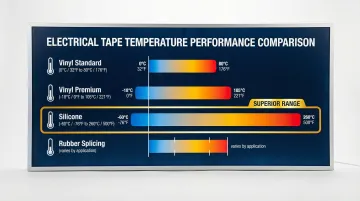
Industrial environments with heat-generating equipment, outdoor exposure, or cold-storage conditions require tapes specifically rated for those temperature extremes. A motor junction box running at 120°C, for example, immediately rules out standard vinyl.
Environmental Exposure
Outdoor, chemical, and moisture-heavy environments demand tapes with documented resistance to UV radiation, water immersion, acids, alkalis, oils, and abrasion. Tapes used indoors in climate-controlled settings have less stringent requirements.
Common Industrial Conditions and Tape Selection:
- Manufacturing floors with chemical exposure: Vinyl or mastic tapes with documented chemical resistance
- Outdoor cable runs: UV-resistant premium vinyl or rubber mastic
- Underground conduit: Mastic sealing tape for moisture exclusion
- Marine environments: Silicone or rubber mastic for salt water resistance
Application Type (Insulating, Splicing, Sealing, Bundling, Marking)
The intended function of the tape determines its required mechanical properties:
- Insulating and splicing: High elongation and dielectric strength
- Sealing applications: Thicker, void-filling materials
- Bundling tasks: Tensile strength and conformability
- Phase marking: Precise color accuracy and abrasion resistance
Using a general-purpose tape for a specialized function — such as vinyl tape on a high-voltage splice — increases the risk of insulation failure, re-work cost, and safety incidents.
Compliance Standards and Certifications
Industrial, utility, and mining applications often require electrical tape to meet specific standards. Non-compliant tape can void warranties, fail inspections, or expose your operation to liability.
Key Standards:
| Standard | Scope | Relevance |
|---|---|---|
| UL 510 | PVC, PE, and Rubber Insulating Tape | Primary safety standard for US/Canada (600V, 80°C) |
| IEC 60454 | Pressure-sensitive adhesive tapes | International standard for tape specifications |
| RoHS | Directive 2011/65/EU | Restricts hazardous substances in electrical materials |
| MSHA | 30 CFR Part 18 | Mandates flame resistance for mining applications |
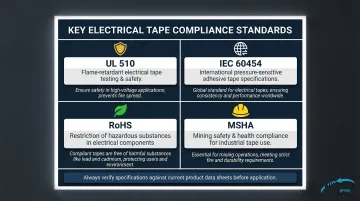
Confirm that the product data sheet explicitly lists the applicable standard before placing volume orders — not all tapes that claim compliance include the test data to back it up.
Longevity and Re-Entry Needs
Some applications are designed to be permanent bonds (high-voltage splices, outdoor sealing), while others need to allow future access (motor leads, panel wiring, maintenance-heavy systems).
Shelf Life Considerations: Manufacturers typically cite a 5-year shelf life from the date of manufacture. Optimal storage is between 10°C (50°F) and 27°C (80°F) with relative humidity below 75%. Deviating from these conditions accelerates adhesive degradation.
Re-Entry Considerations: Re-entry behavior varies significantly by tape type:
- Varnished cambric and standard vinyl wraps: Peel cleanly without damaging underlying insulation
- Self-amalgamating rubber: Fuses into a semi-permanent bond; removal requires cutting and re-taping
- Silicone tape: Forms the most permanent bond — plan for full re-tape on any maintenance access
For systems with scheduled inspections or frequent maintenance, tape removability should factor into the selection as heavily as dielectric performance.
How Alliance Packaging Group Can Help
Alliance Packaging Group is a single-source industrial supplier carrying electrical tape from top brands like 3M — alongside the broader packaging and industrial supplies that manufacturers, distributors, and warehousing operations need. This eliminates the friction of managing multiple vendor relationships for routine consumables.
Why Industrial Buyers Choose Alliance Packaging Group:
- Factory-direct pricing on over 10,000 in-stock products — consistently below industry standard
- Same-day shipment on most orders, with nationwide just-in-time delivery programs for ongoing supply needs
- Volume pricing that lowers per-unit cost for high-usage operations
- Professional-grade tapes from 3M, Intertape, and Sealed Air, with consistent availability and no backorder delays
- Expert tape selection consultation to match voltage class, environment, and application to the right spec
- Certified Women's Business Enterprise (WBENC) since 2011, supporting supplier diversity requirements
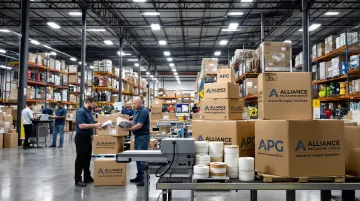
Their in-stock electrical tape selection includes UL-listed vinyl tape in 10 color options, aluminum foil tape, glass cloth tape, and specialty adhesive solutions — all available for immediate shipment. For applications where the wrong tape creates real risk, their technical team can walk you through the right choice before you order.
For volume pricing or product consultation, contact Alliance Packaging Group at 770-309-1012 or sales@apg-go.com.
Conclusion
Choosing the right electrical tape is not a casual decision in industrial settings. The wrong tape in the wrong environment creates real risks: insulation failure, compliance violations, unplanned downtime, and worker safety incidents. The right tape — matched to voltage class, environment, and application — protects operations at every level.
Tape selection also isn't static. As applications evolve, equipment changes, or compliance requirements are updated, revisit your tape specifications periodically to confirm they still meet operational and safety standards. Alliance Packaging Group stocks a broad range of industrial and electrical tapes — with nationwide just-in-time delivery — so sourcing the right product when specifications change doesn't become a bottleneck in your operations.
Frequently Asked Questions
What is the most popular electrical tape?
Vinyl PVC tape (such as 3M Scotch Super 33+ or Super 88) is the most widely used type due to its versatility, all-weather performance, and suitability for general low-voltage insulation and bundling tasks up to 600V. For professional applications, the right choice shifts based on voltage class and environment — higher-voltage work calls for rubber or silicone tapes entirely.
What is the difference between vinyl and rubber electrical tape?
Vinyl tape uses a pressure-sensitive adhesive and is suited for low-voltage insulation and general use up to 600V, while rubber (self-amalgamating) tape bonds to itself without adhesive and is engineered for high-voltage splicing and moisture-critical applications up to 69kV.
How do I know what voltage rating I need for electrical tape?
The tape's voltage rating must meet or exceed the maximum system voltage of the application. Low-voltage systems (up to 600V) can use standard vinyl tape, while medium- and high-voltage cable work requires rubber or silicone tapes rated for 15kV to 69kV. The product data sheet lists the tape's dielectric strength and confirms whether it meets your system's requirements.
Can electrical tape be used outdoors in industrial settings?
Not all electrical tape is rated for outdoor use. Verify UV resistance, moisture resistance, and cold-flex rating before using any tape in exposed environments — professional-grade vinyl, rubber mastic, and silicone tapes generally meet these requirements, while economy tapes do not.
Does electrical tape expire or degrade over time?
Yes, electrical tape has a shelf life. Adhesives can dry out, vinyl can harden or crack, and rubber can lose flexibility over time, especially if stored in high heat or humidity. Most manufacturers recommend using tape within five years of manufacture and storing rolls in cool, dry conditions between 10°C and 27°C.
What color electrical tape should I use for wire identification in industrial settings?
The NEC and OSHA provide color-coding guidelines: black is standard for insulation, while red, blue, yellow, and orange indicate phase and voltage level distinctions. Follow the electrical code for your jurisdiction and apply colors consistently to reduce wiring errors during maintenance.