Introduction
Shipping damage is a direct hit to your bottom line. Industry data shows that 1 in 10 e-commerce packages arrives damaged, with carrier-specific rates reaching 11% for UPS, 10% for USPS, and 7% for FedEx. The financial fallout goes beyond replacements: 73% of customers are unlikely to purchase again after receiving a damaged item, threatening customer lifetime value with every broken shipment.
While some damage is unavoidable, the vast majority can be prevented through deliberate packaging decisions, carrier practices, and operational systems. This post outlines 10 proven strategies that manufacturing, distribution, and e-commerce businesses can implement immediately to reduce damage rates and protect their bottom line.
Key Takeaways
- Size boxes with at least 2 inches of clearance on all sides for cushioning
- Use double-boxing and immobilizing fill for fragile or high-value shipments
- Seal every package with the H-taping method using pressure-sensitive tape
- Label all box faces clearly with handling instructions and environmental warnings
- Log every damage claim to spot carrier or packing failures early
Why Shipping Damage Costs More Than You Think
The true cost of a damaged shipment extends well beyond the product value itself. A single damaged return can incur hundreds of dollars in added costs when factoring in return freight, inspection labor, replacement shipping, customer service time, and the long-term cost of lost customer trust and repeat business.
Six Root Causes of Shipping Damage:
- Excess void space allowing products to shift inside boxes
- Insufficient cushioning failing to absorb impact forces
- Improper handling by carriers during sorting and transit
- Moisture and humidity exposure causing corrosion or warping
- Theft or pilferage during the supply chain journey
- Inadequate or misleading labeling leading to mishandling
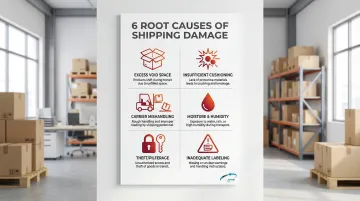
Each of these failure points multiplies across every shipment you send. For high-volume shippers in manufacturing, warehousing, and distribution, that exposure compounds fast — reducing damage from 10% to 7% across thousands of monthly shipments means hundreds of recovered orders and thousands of dollars back on the bottom line.
Strategies 1–4: Build a Strong Packaging Foundation
Strategy 1: Choose the Right Box Size
The "two-inch rule" is your starting point: the box should provide roughly two inches of clearance on all sides of the product to accommodate cushioning, while still being close enough to the item's dimensions to prevent excessive shifting. Oversized boxes create two problems—they increase void space risk and trigger higher dimensional weight shipping charges.
2025 DIM Weight Update:
Effective August 18, 2025, both FedEx and UPS will round every fractional inch of a package's dimensions upward. A box measuring 12.1" x 12.1" x 12.1" will now be calculated as 13" x 13" x 13", significantly increasing the cubic volume used for DIM weight calculation. This change makes right-sizing boxes more critical than ever.
Alliance Packaging Group stocks over 1,000 box sizes for immediate shipment nationwide, ranging from 3x3x3 inches to 60x32x48 inches. Popular sizes include 15x15x4, 16x16x4 corrugated, and 24x13x31 multi-depth boxes — enough variety to find a precise fit rather than settling for whatever's on hand.
Strategy 2: Select the Right Cushioning and Void-Fill Materials
Different cushioning materials serve different purposes. The goal is to immobilize the product inside the box so nothing shifts during transit.
Primary Cushioning Materials and Use Cases:
- Bubble wrap: Best for direct item wrapping and protecting fragile surfaces from impact and scratches
- Foam inserts (EPS, PU, PE): Ideal for high-value or irregularly shaped items requiring superior shock absorption
- Air pillows: Efficient void-filling around already-cushioned items to prevent movement
- Kraft paper: Lightweight void fill for general applications
- Packing peanuts: Supplemental fill, but requires at least 2 inches of cushioning around contents due to shifting risk
Under-filling allows products to shift and collide with box walls. Over-filling causes boxes to bulge and seams to weaken. Either extreme leads to damage — the finished package should feel firm with no detectable internal movement when shaken in any direction.
The global protective packaging market is estimated at $37.86 billion in 2024, projected to reach $56.97 billion by 2033, driven by e-commerce growth and the need for better damage prevention.
Strategy 3: Wrap Every Item Before It Goes in the Box
Item-level wrapping is the first physical barrier between your product and transit forces.
Proper Wrapping Technique:
- Fill any internal voids in the product itself (inside a glass, hollow object, or cavity) with crumpled paper
- Wrap the item in a layer of paper to prevent direct bubble wrap contact
- Add one to two layers of bubble wrap secured with tape
- Secure tape at wrap seams only — over-sealing complicates returns and inspection
This multi-layer approach creates progressive cushioning that absorbs impact forces before they reach the product. The paper underlayer also prevents bubble wrap from leaving adhesive residue on finished surfaces.
Strategy 4: Use Double-Boxing for Fragile or High-Value Shipments
When a single box isn't enough, double-boxing adds a second layer of protection for items where any impact damage is unacceptable.
Double-Boxing Method:
- Wrap the item using the technique in Strategy 3
- Place the wrapped item in a correctly sized inner box with padding on all sides
- Seal the inner box securely
- Place the inner box inside a larger outer box
- Add cushioning material between the two boxes (minimum 3 inches on all sides)
- Ensure the inner box cannot move when the outer box is shaken
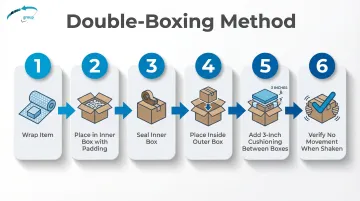
This method is especially valuable for electronics, glass, ceramics, and high-value industrial components. The outer box absorbs initial impacts, while the inner box and dual cushioning layers protect the product from residual forces.
Alliance Packaging Group carries both inner and outer box options alongside foam sheets, bubble wrap, and paper cushioning systems. Sourcing all components from one supplier eliminates the delays and inconsistencies that come with ordering from multiple vendors.
Strategies 5–7: Seal, Label, and Signal for Safe Handling
Strategy 5: Seal Every Package with Proper Packaging Tape
Box failure at the seams is one of the most preventable causes of shipping damage.
The H-Taping Method:
Apply tape along all seams and edges forming an "H" on both the top and bottom of the box:
- One strip along the center seam
- Two strips across the side seams
- Repeat on both top and bottom surfaces
This method seals all open seams against moisture and accidental opening during transit.
Not all tape holds up equally under transit stress. - Pressure-sensitive plastic tape works for standard applications and is the easiest to apply
- 60 lb nylon reinforced filament tape (at least 3 inches wide) is required for heavy boxes
- Water-activated paper tape should be at least 60-pound basis weight kraft
Never use: Masking tape, cellophane tape, duct tape, string, or paper over-wrap for sealing—carriers explicitly advise against these materials because they fail under compression and vibration.
Industrial-strength commercial grade shipping tapes typically offer a tensile strength of 30 pounds per inch, while filament tapes can offer significantly higher strength (up to 170 lbs/in) for heavy-duty applications.
Strategy 6: Label Packages Clearly and Correctly
Clear labeling creates accountability at each handoff point in the supply chain and provides important documentation if a damage claim needs to be filed.
Handling Instruction Labels:
Apply "Fragile," "This Side Up," and "Handle With Care" labels on multiple faces of the box so they are visible regardless of orientation. High-visibility fluorescent labels are particularly effective in busy warehouse and sorting environments.
Shipping Label Placement:
- Place labels on the package's largest surface
- Keep labels flat and away from box seams to prevent scanning errors
- Never wrap labels around corners or edges
- Do not cover labels with tape or other materials that could obscure barcodes
- Ensure shipping labels and packing slips face the same direction
Improper labeling triggers scanning failures that push packages into manual handling queues — where damage rates are consistently higher.
Strategy 7: Use Shock, Tilt, and Impact Indicators on High-Value Shipments
Shock, tilt, and impact indicators are low-cost adhesive devices that change color or display a warning when a package has been dropped, tipped past a threshold angle, or subjected to excessive force. For high-value or fragile shipments, they serve two distinct purposes.
- Shock indicators (such as ShockWatch): Turn red when impact exceeds a set G-force threshold, available in sensitivities from 25G to 100G
- Tilt indicators (such as TiltWatch): Activate if a package tips past a specific angle, typically 80 degrees
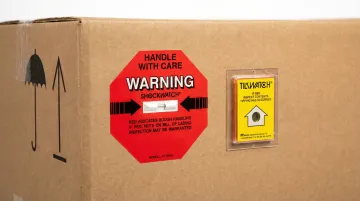
A visible indicator on the outside of a box signals that the shipment is being monitored — prompting more careful handling at every stop. If contents arrive damaged, the activated indicator provides documented evidence to support a damage claim.
In a case study involving semiconductor equipment, customers reported that shipping damage was reduced by an average of 50% when highly visible impact monitoring tags were placed on shipments.
Strategy 8: Shield Shipments from Environmental Hazards
Moisture Damage
Condensation can build up inside containers when shipments pass through varying temperature and humidity zones, causing corrosion, warping, mold, and spoilage—especially for electronics, food products, pharmaceuticals, and paper goods.
Approximately 10% of all container shipments are discarded due to moisture-related damage, with insurers estimating that 12% of all container shipment damage is moisture-related. "All-risk" cargo insurance often excludes moisture damage because it is considered preventable — so protecting against it falls entirely on the shipper.
Prevention Methods:
- Include silica gel desiccant packets inside packages prone to moisture exposure (use 1.2 units of desiccant per cubic foot of air space as a baseline)
- Use waterproof or moisture-resistant liners inside the outer box for sensitive products
- Select moisture barrier bags with FDA/USDA approval for food and pharmaceutical applications
Temperature Considerations
Perishable items, certain pharmaceuticals, and some electronics require temperature-controlled packaging when moving through extreme climate zones. Businesses shipping across multiple regions should map climate risks along their typical corridors before selecting thermal protection.
Useful options include:
- Insulated mailers that combine thermal protection with moisture barrier features
- Phase-change materials for extended cold chain maintenance
- Time and temperature labels that provide monitoring data for compliance documentation
Pest and Infestation Risk
Environmental threats don't stop at temperature and moisture. For food and consumable products — particularly in international or long-haul ocean freight — inner packaging must be sealed tightly enough that contents cannot escape or be accessed, and the outer box should have no openings that invite entry. Wood packaging material (WPM) in international trade must be treated and marked in compliance with ISPM 15 standards to prevent pest spread.
Strategies 9–10: Carrier Vetting, Insurance, and Continuous Improvement
Strategy 9: Evaluate Your Carriers and Run Trial Shipments
Not all carriers perform equally across all routes, package types, or service levels.
Carrier Assessment Criteria:
- Documented damage rates and on-time performance (2024 peak season OTP: UPS 96.5%, FedEx 91.8%, USPS 90.4%)
- Real-time tracking capabilities and visibility
- Established claims processes and responsiveness
- Specialized handling options for fragile or high-value freight
Send test shipments—including fragile or high-priority packages—before committing to a carrier at volume. This practical evaluation reveals real-world performance that statistics alone cannot capture.
Shipping Insurance vs. Carrier Liability:
Most standard carrier liability is limited to $100 per package unless a higher value is declared. Declared value charges from carriers can be expensive (roughly 1% of declared value), while third-party cargo insurance premiums typically range from 0.1% to 0.5% of the declared cargo value—resulting in savings of 30–90% compared to carrier rates.
Third-party insurance provides broader "all-risk" coverage than standard carrier liability, making it the right call for high-value shipments. That said, insurance is a financial backstop—not a substitute for solid packaging. The next strategy addresses how to reduce damage at the source.
Strategy 10: Track, Document, and Systematically Reduce Damage
Build a simple damage log to record every damaged shipment with details on:
- Type of damage (crushed box, broken item, moisture damage)
- Carrier and service level used
- Packaging materials and methods employed
- Whether damage was internal (item) or external (box)
- Route and destination
- Product SKU or category
Pattern Recognition:
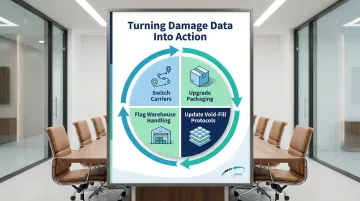
Over time this data reveals patterns—specific carriers, routes, product types, or packaging methods—that are causing disproportionate damage. Regular review of this data allows businesses to make targeted improvements:
- Switching carriers for specific routes showing high damage rates
- Upgrading packaging for specific SKUs with elevated damage frequency
- Updating void-fill protocols when internal movement is detected
- Flagging a particular warehouse's handling quality for retraining
Testing Standards:
Using ISTA test procedures (e.g., 1-Series for screening, 3-Series for general simulation) allows shippers to predict and prevent damage before it occurs. For e-commerce vendors, adhering to ISTA 6-Amazon protocols is often mandatory to avoid chargebacks and ensure packages withstand the specific rigors of fulfillment networks.
Done consistently, even a basic damage log can cut incident rates significantly within a quarter—turning one-off complaints into actionable data that drives better packaging, better carrier selection, and lower costs over time.
Frequently Asked Questions
Frequently Asked Questions
Is it worth paying for package protection?
Shipping insurance is worth it for high-value or fragile shipments because standard carrier liability is typically limited to $100—often too low to cover actual replacement costs. Third-party insurance premiums typically run 0.1–0.5% of declared value, a fraction of what you'd spend on replacements and return shipping.
Who is responsible if a package is damaged in shipping?
Liability depends on circumstances: if damage occurred due to carrier mishandling and the shipper can demonstrate proper packaging, the carrier is generally liable up to their declared limit. If packaging was inadequate, the shipper typically bears that liability—which is why solid packaging practices and shipping insurance work together as a combined risk strategy.
What is the best cushioning material for shipping fragile items?
Bubble wrap and custom foam inserts offer the best protection for fragile items, with foam inserts being ideal for very high-value or irregularly shaped products. Air pillows and kraft paper work well for void-filling around already-cushioned items but should not be the primary cushioning layer.
How do I prevent moisture damage during shipping?
Three steps cover most moisture risks:
- Add silica gel desiccant packets (roughly 1.2 units per cubic foot of air space)
- Use moisture-resistant or waterproof inner liners for sensitive products
- Choose temperature-controlled shippers for items prone to condensation during transit
How can businesses reduce shipping damage at high volume?
Start by standardizing packaging by SKU—right-sized boxes and consistent fill materials eliminate guesswork at scale. From there, run periodic trial shipments to evaluate carrier performance, log damage incidents to spot patterns, and source materials from a single supplier to maintain consistent quality and availability. Alliance Packaging Group's just-in-time delivery programs are designed specifically for high-volume operations that can't afford supply gaps.