
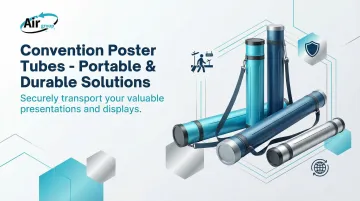
This scenario plays out more often than most presenters realize. Research shows that over 68% of damaged artwork claims stem from inadequate tube rigidity rather than rough handling. The right convention poster tube isn't just a container—it's the unsung hero that ensures your hard work arrives intact and ready to impress.
This guide covers everything you need to select, size, and transport poster tubes for conferences: the three main tube types and their tradeoffs, critical features that prevent damage, how to match tube dimensions to standard poster sizes, and proven strategies for air travel and shipping.
Key Takeaways
- Choosing the right poster tube prevents damage during transit — the wrong one means arriving at a convention with creased or torn work
- Standard 36"×48" conference posters require tubes at least 38-40 inches long with 2-3 inch inner diameter minimum
- Prioritize rigid plastic or heavy-duty tubes over thin cardboard — 0.125-inch wall thickness reduces failure rates by 92% compared to standard options
- Screw-top or locking end caps prevent the most common damage: lost caps and exposed edges
- Bulk orders through B2B packaging distributors with factory-direct pricing cut per-unit costs and ship nationwide on demand
What Are Convention Poster Tubes?
Convention poster tubes are cylindrical containers designed to roll and protect large-format printed posters during travel and storage. You may also see them called document tubes, map tubes, art tubes, or mailing tubes—all refer to the same essential product designed to keep oversized prints safe from creasing, moisture, and impact damage.
Material Types and Their Tradeoffs
The market offers three primary tube materials, each with distinct advantages for convention travel:
| Material Type | Best For | Key Advantages | Limitations |
|---|---|---|---|
| Cardboard/Kraft | Single-use or budget-conscious buyers | Lightweight, recyclable, low cost | Absorbs moisture; crushes easily if wall thickness is below 0.080" |
| Rigid Plastic | Frequent travelers and reusable applications | Waterproof, impact-resistant, transparent options available | Higher upfront cost; heavier than kraft |
| Aluminum/Composite | High-value prints requiring maximum protection | Superior crush resistance, puncture-proof, professional appearance | Most expensive; overkill for most conference use |
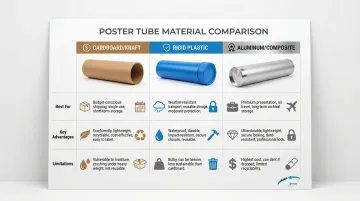
For most convention travelers, the choice comes down to kraft vs. plastic. Kraft tubes work well for one-time shipments or tight budgets, but wall thickness matters — standard 0.060-inch walls flex under pressure and absorb moisture. Plastic tubes solve both problems, and clear-walled models let you confirm the print is intact without unscrewing the cap. Aluminum is best reserved for high-value artwork that ships frequently.
Where to Source Quality Tubes
Office supply stores and shipping carriers stock basic mailing tubes, but organizations needing multiple units or specialized features should consider packaging suppliers. Alliance Packaging Group carries kraft tubes with 3-ply spiral wound construction, non-rolling square tubes, and adjustable telescoping options — with volume pricing and nationwide delivery suited to teams managing multiple conferences at once.
Key Features to Look For in a Convention Poster Tube
Not all poster tubes offer equal protection. Focus on these critical features to ensure your poster survives the journey:
Material and Wall Thickness
Wall thickness matters more than material type. Industry data shows that over 68% of damaged artwork claims result from inadequate tube rigidity, not rough handling.
The solution: Upgrade from standard 0.060-inch kraft to 0.125-inch (1/8 inch) wall thickness—comparable to corrugated boxes. This single change reduces tube failure rates by 92%.
Both UPS and FedEx recommend shipping rolled goods inside corrugated boxes rather than thin-walled tubes, and both carriers disclaim liability for damage caused by inadequate packaging.
Secure End Cap Design
Lost end caps during transit are one of the most common causes of poster damage, exposing rolled edges to crushing and moisture. Three cap types dominate the market:
- Friction-fit caps — Push-on plastic caps that fit snugly but pop off under pressure. Always secure with packing tape if using these
- Screw-top caps — Threaded caps that twist to lock in place, offering significantly better security without tape
- Locking/tethered caps — Proprietary designs that lock with a twist or feature retention cords to prevent loss
For air travel or checked baggage, screw-top or locking caps are essential. Friction-fit caps should be considered disposable-use only unless reinforced with tape.
Carrying Options
Conventions mean hours of walking, shuttle rides, and crowded exhibit halls. Carrying a 40-inch tube by hand the entire time is exhausting and increases drop risk.
Look for tubes that include:
- Shoulder straps for hands-free carrying
- Built-in handles for quick grabs
- Carabiner clips or attachment points to secure the tube to rolling luggage or backpacks
These features reduce fatigue and the chance of leaving your tube behind at a booth or in transit.
Diameter and Interior Clearance
Tube diameter directly impacts poster condition. Rolling a poster too tightly causes permanent creasing at the core and curl memory that makes the poster difficult to display flat.
Diameter recommendations:
- Minimum 2-3 inches for standard paper posters (24"×36" or smaller)
- 3-4 inches preferred for larger formats (36"×48") or heavyweight substrates
- 4+ inches for fabric prints, foam-backed posters, or multiple posters rolled together
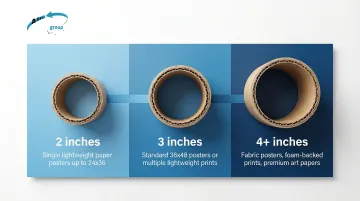
When in doubt, go wider — a larger diameter reduces stress on paper fibers and coating layers, which matters most for limited-edition or high-value prints.
Weather and Moisture Resistance
Conference logistics often involve outdoor transit—shuttle buses, loading docks, or walking between hotels and convention centers. Humidity and rain pose serious risks to paper-based prints.
For any outdoor exposure or air travel:
- Choose plastic tubes or coated kraft tubes with sealed caps
- Avoid uncoated cardboard, which absorbs moisture and loses structural integrity when wet
- Verify that end caps create a weather-tight seal, not just a friction fit
Choosing the Right Size Poster Tube for Your Convention Poster
Selecting the correct tube dimensions prevents damage and ensures your poster fits comfortably without excessive tension.
Standard Conference Poster Dimensions
Most academic and trade conferences follow these size conventions:
- 36"×48" (portrait or landscape) — The most common U.S. standard for research posters
- 48"×36" — Landscape orientation variant
- A0 (33.1"×46.8") — International ISO standard used globally
Always verify your specific conference requirements, as some events specify custom dimensions or maximum sizes based on available display board space.
Length Requirements
Your tube should be at least 2-4 inches longer than your poster's rolled dimension (the longer edge).
Why the buffer matters:
- Prevents poster edges from touching end caps, which causes crushing and curling
- Allows room for inner padding or protective tissue
- Accommodates slight size variations in commercial printing
Example: For a 36"×48" poster rolled along the 36-inch edge, select a tube at least 38-40 inches long.
Diameter Considerations
Wider tubes reduce stress on the print, especially for heavyweight coated paper, canvas, or fabric substrates.
Diameter guidelines:
- 2 inches — Adequate for single lightweight paper posters up to 24"×36"
- 3 inches — Recommended for standard 36"×48" posters or multiple lightweight prints
- 4+ inches — Necessary for fabric posters, foam-backed prints, or premium art papers
A tighter roll increases curl memory and makes posters harder to flatten during setup — sizing up by one diameter is usually worth it for anything beyond standard paper.
Adjustable and Telescoping Tubes
Telescoping poster tubes adjust to fit different poster lengths, making them practical for presenters who travel between conferences with varying size requirements. Alliance Packaging Group stocks adjustable and telescopic mailing tube options that accommodate multiple poster formats without needing separate tubes for each size.
How to Transport Your Poster Tube to a Convention
Getting your poster safely to the venue requires strategic planning, especially when air travel is involved.
Hand-Carrying vs. Checking at the Airport
Here's the critical disconnect: While TSA generally permits poster tubes through security, airline carry-on policies create a major obstacle.
Airline carry-on size limits (typical):
- American Airlines: 22″×14″×9″
- Delta: 22″×14″×9″
- United: 22″×14″×9″
- Southwest: 24″×16″×10″ (most generous)
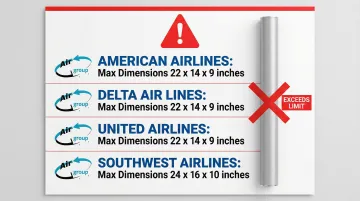
Most conference poster tubes (36-48 inches long) exceed these limits. While some travelers successfully carry tubes by claiming the "musical instrument exception" or relying on crew discretion, there's a high risk of forced gate-checking.
If you must check your tube:
- Use a rigid plastic or heavy-duty tube, never thin kraft
- Secure end caps with multiple layers of packing tape
- Wrap the entire tube in bubble wrap or foam padding
- Label clearly with your name, phone number, and "FRAGILE - CONFERENCE POSTER"
Cylindrical items get mishandled at higher rates than standard luggage — carry-on is always the better call if you can negotiate it with gate agents.
Mailing Your Poster in Advance
Shipping directly to your hotel or convention venue eliminates airport stress and reduces damage risk.
Carrier options:
- USPS offers Priority Mail and Priority Mail Express with tracking, though their free mailing tubes may not fit all poster sizes
- UPS and FedEx recommend placing tubes inside corrugated shipping boxes for maximum protection and insurability
- Commercial-grade poster tubes from packaging suppliers offer superior protection compared to carrier-provided options
Shipping best practices:
- Send packages 5-7 business days before your arrival to account for delays
- Address to: [Your Name], [Conference Name], [Hotel/Venue Name], [Address], with "HOLD FOR GUEST ARRIVAL [Date]" prominently displayed
- Include a duplicate label inside the tube in case external labels are damaged
- Call the hotel or venue to confirm they accept advance shipments and note any special receiving procedures
For organizations shipping to multiple conference locations, Alliance Packaging Group's kraft mailing tubes — 3-ply spiral wound with snap-on end caps — are available for nationwide bulk orders, making per-tube costs manageable when each presenter needs their own tube.
Once your posters are en route, the focus shifts to day-of logistics.
Ground Travel and Venue Navigation
Practical tips for convention day:
- Attach a shoulder strap or carabiner to keep your hands free for badge scanning, coffee, and handshakes
- Use a bungee cord or luggage strap to secure the tube to rolling luggage
- Store the tube vertically when possible to prevent end cap stress
- Keep the tube with you at all times—don't leave it unattended at booths or in coat check
Organizing Multiple Posters
Exhibitors or institutions presenting multiple posters face additional logistical challenges.
Best practices:
- Use individual labeled tubes per poster rather than rolling multiple posters into one tube
- Label each tube with poster title, presenter name, and booth/session number
- Consider color-coded end caps or tape for quick visual identification
- Bulk tube orders from packaging suppliers make individual tubes cost-effective
Color-coded labels are especially useful when multiple team members are pulling posters for simultaneous sessions.
Tips for Protecting Your Poster Inside the Tube
Proper packing technique is as important as tube quality.
Rolling Technique
- Roll the poster print-side inward (image facing the core) to protect the printed surface from scratching
- Use a loose roll rather than a tight one — excessive tension causes creasing
- Insert a sheet of glassine or acid-free tissue paper between the poster and tube wall to prevent ink transfer
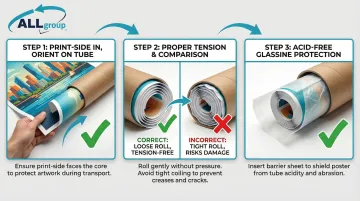
Many presenters roll print-side out, but this compresses the image layer and increases cracking risk, especially with heavy ink coverage.
Adding Inner Padding
Rolling technique gets the poster in safely — internal support keeps it that way. Before rolling, insert a cardboard core or foam sleeve inside the tube so the poster wraps around it rather than collapsing on itself.
For shipped posters, add padding at both ends with these materials:
- Foam padding or bubble wrap at each end cap to cushion against impact
- A snug fit that prevents the rolled poster from sliding and abrading its edges during transit
Labeling and Documentation
External labels should include:
- Poster title
- Presenter name
- Conference name and dates
- Contact phone number
- "FRAGILE - DO NOT BEND"
Internal documentation: Include a printed copy of this information inside the tube as backup in case external labels are damaged or removed during shipping.
Frequently Asked Questions
Does the USPS carry poster tubes?
Yes, USPS offers mailing tubes through their Priority Mail supplies, including a free Dual-Use tube for specific services. However, sizes suitable for large conference posters are often unavailable at local post offices — heavy-duty commercial poster tubes from packaging suppliers offer better protection for 36"×48" prints.
What is a standard poster size for conferences?
The most common conference poster sizes are 36"×48" (portrait) and 48"×36" (landscape) in the United States, and A0 (33.1"×46.8") internationally. However, specific conferences may have unique requirements based on display board dimensions, so always confirm requirements with your event organizer before printing.
What are poster tubes called?
Poster tubes are also commonly called document tubes, map tubes, art tubes, or mailing tubes. All these terms refer to cylindrical containers designed to roll and protect large-format prints during transport or storage.
Can you carry a poster tube on an airplane?
TSA generally permits poster tubes through security, but most U.S. airlines enforce carry-on length limits (typically 22 inches) that standard poster tubes exceed. If gate-checking is unavoidable, secure end caps with packing tape and use a rigid tube for maximum protection.
What size poster tube do I need for a 36"×48" conference poster?
For a 36"×48" conference poster, select a tube at least 38-40 inches long (allowing a 2-4 inch buffer) with an inner diameter of 2-3 inches. A 3-inch diameter is preferred for heavier paper stocks, as it reduces curl memory and makes the poster easier to hang flat.