Introduction
PP and PET strapping are the two most widely used plastic strapping materials in manufacturing, warehousing, and distribution — and while they look identical on a roll, they perform very differently under real-world conditions. PP (polypropylene) offers flexibility and affordability for light-duty applications, while PET (polyester) delivers the tensile strength and tension retention needed for heavy industrial loads.
Selecting the wrong strap can lead to load failures in transit, unnecessary material costs, or re-strapping downtime — all of which cut directly into throughput. According to the TT Club, approximately 65% of cargo damage claims stem from poor packing practices, contributing to an estimated $6 billion in annual losses worldwide.
This guide breaks down the key differences between PP and PET strapping across strength, cost, application fit, and equipment compatibility — so you can make the right call for your operation.
Key Takeaways
- PP strapping suits light-to-medium loads in controlled indoor environments — lower cost, easy to handle
- For heavy, rigid, or long-haul shipments, PET's tensile strength and minimal elongation are the better fit
- PP loses roughly 50% of tension within 1-2 hours; PET holds tension over extended transit times
- Switching between PP and PET means switching tools — check equipment compatibility before you commit
- The right choice comes down to load weight, shipping distance, storage conditions, and equipment costs
PP vs PET Strapping: Quick Comparison
Here's how PP and PET strapping compare across the five factors that matter most for load security and application fit.
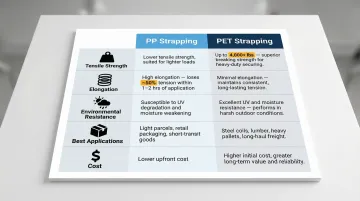
| Attribute | PP Strapping | PET Strapping |
|---|---|---|
| Material | Polypropylene — lightweight, flexible thermoplastic | Polyethylene terephthalate — dense, rigid polyester |
| Tensile Strength | 120–600 lbs; light-to-medium loads (cartons, bundles, retail goods) | Up to 4,000+ lbs; comparable to steel strap for heavy industrial loads |
| Elongation | 14%–50% elongation; absorbs shock but loses ~50% of applied tension within 1–2 hours | 10%–20% elongation; maintains tension reliably across long-distance or extended-storage transit |
| Environmental Resistance | Susceptible to UV and temperature extremes; best for short-term indoor use | Resistant to UV, moisture, and temperature swings (-22°F to 176°F); suitable for outdoor storage and export |
| Cost | Lower upfront cost; ideal for high-volume, light-duty applications | Higher per-unit cost, but fewer replacements and less re-strapping deliver better long-term value |
What is PP Strapping?
PP strapping is a plastic strapping material manufactured from polypropylene resin. Its high elongation rate makes it flexible enough to absorb minor movement and compression during transit without snapping. In fact, it accounts for 46.6% of the global strapping materials market in 2022 — making it the dominant choice for general packaging worldwide.
Core operational benefits include:
- Reduces operator fatigue on high-volume lines thanks to its low weight
- Compatible with manual, semi-automatic, and battery-powered tools
- Affordable enough for operations packaging hundreds or thousands of units per day
Choosing the right PP strap also means selecting the right format for your equipment and workflow. Key variations include:
- Embossed surface finish improves seal strength with friction-weld tools; flat finish suits heat-seal applications
- Machine-grade rolls are built for automated equipment; hand-grade rolls work with manual tensioning tools
Use Cases of PP Strapping
PP strapping fits operationally in light-to-medium load unitization such as carton bundling, retail goods consolidation, and pallet wrapping for lightweight consumer products — particularly in indoor, temperature-controlled warehouse and distribution environments.
Industries where PP strapping is dominant:
- Food and beverage packaging
- E-commerce fulfillment
- Printing and paper
- Consumer goods distribution
Smooth edges and flex under tension make it a reliable choice for finished goods that can't afford surface damage in transit.
What is PET Strapping?
PET strapping is a high-performance plastic strap manufactured from polyethylene terephthalate. Its molecular structure gives it significantly higher tensile strength and lower elongation than PP, allowing it to maintain tight, consistent tension even under heavy load weight, vibration, or shifting during long-distance transit.
Key benefits:
- Holds tension over time without creep — unlike PP, which loses half its tension within hours
- Resists UV exposure and temperature swings — performs reliably in conditions that would degrade PP strap
- Serves as a direct replacement for steel strapping — without the sharp edges, rust risk, or handling hazards associated with metal
PET strapping comes in three formats:
- Embossed PET — used with friction-weld or notch-and-seal tools
- Smooth PET — used with heat-seal equipment
- Recycled-content PET — available with up to 100% post-consumer recycled content, relevant for companies with sustainability targets
Use Cases of PET Strapping
PET strapping is the right choice when load integrity can't be compromised. Common applications include:
- Heavy or rigid palletized loads destined for long-distance or export shipping
- Outdoor or uncontrolled storage environments
- Loads prone to shifting during transit — construction materials, lumber, bricks, and metal coils
Industries where PET strapping is dominant:
- Construction and building materials
- Metals and steel distribution
- Industrial manufacturing
- Lumber and timber
- Export or international shipping operations
The cost case for switching is strong in all of these sectors. PET strapping provides 4 times the linear footage of steel for the same weight, translating to a 30% to 50% reduction in raw material expenditure.
PP vs PET Strapping: Which Is Right for Your Application?
Key Decision Factors
Before choosing, evaluate these factors:
- Load weight and rigidity — heavier, denser loads require PET
- Shipping distance and duration — long-haul or export shipments benefit from PET's tension retention
- Storage environment — outdoor or temperature-variable conditions demand PET
- Budget and volume — high-volume, light-duty operations favor PP's lower unit cost
- Existing tooling and equipment compatibility — switching from PP to PET or vice versa often requires different tools or machine heads
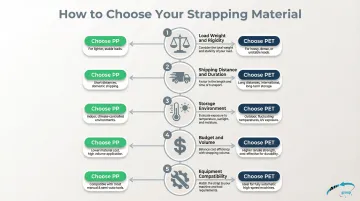
When to Choose PP Strapping
Choose PP strapping if you're:
- Handling light-to-medium loads in a controlled indoor environment
- Running a high-volume packaging line where cost-per-strap matters most
- Working with compressible goods that benefit from a flexible, shock-absorbing strap
When to Choose PET Strapping
Choose PET strapping if you're:
- Securing heavy or dense loads
- Shipping long distances or internationally
- Storing goods outdoors or in variable temperatures
- Replacing steel strapping while eliminating cut-hazard risks
Total Cost of Ownership (TCO)
Frame the cost comparison as total cost of ownership, not just unit price. A lower-cost PP strap that loses tension mid-transit and requires re-strapping actually costs more than a higher-priced PET strap that holds securely from warehouse to final destination.
For example, a steel coil manufacturer switched from ordinary steel straps to AAR-approved PET strapping, cutting damage claims by approximately 30%, reducing rework time, and trimming weight-based freight costs.
Many operations running both light-duty and heavy-duty lines stock both materials. Alliance Packaging Group supplies PP and PET strapping alongside compatible tooling and application guidance — all under one account, with factory-direct pricing and nationwide just-in-time delivery.
Real-World Scenarios
Scenario 1: Consumer Goods Distributor
A high-volume fulfillment center packaging hundreds of carton shipments daily is a natural fit for PP strapping. Matching the right width and tool type to the load eliminates over-strapping waste and reduces per-unit material cost. PP's flexibility also protects finished goods from edge damage during handling.
Scenario 2: Building Materials Manufacturer
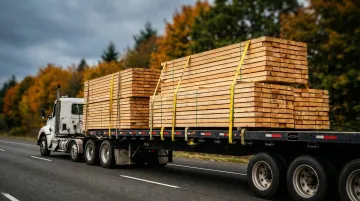
Heavy bundles of timber or brick headed for long-haul freight need PET strapping — the only plastic option that holds tension through vibration, temperature swings, and extended storage. PP in this scenario is a cost risk: tension loss causes load shift, triggering damage claims, rejected shipments, and re-strapping delays.
Need help choosing? Alliance Packaging Group's packaging experts can assess your specific application and recommend the right strapping material, width, thickness, and tooling. Reach out at 770-309-1012 or sales@apg-go.com.
Conclusion
PP and PET strapping each have a clear role in modern packaging operations. The question isn't which is universally better — it's which fits your load, your environment, and your supply chain.
The four key differentiators — tensile strength, tension retention, environmental resistance, and total cost of ownership — each point to a concrete outcome: fewer load failures, lower re-strapping costs, safer handling, and more consistent delivery performance. Get the material match right, and those gains follow.
Frequently Asked Questions
What is the difference between PP and PET straps?
PP (polypropylene) is a lighter, more flexible strap suited for light-to-medium loads in indoor environments, while PET (polyester) is stiffer and stronger, designed for heavy loads, outdoor storage, and long-distance shipping. The key functional difference is tensile strength and tension retention over time.
Which is better: PP strapping or PET strapping?
Neither is universally better. PP is better for cost-sensitive, high-volume, light-duty applications, while PET is better for heavy, rigid, or weather-exposed loads. The right choice depends on load weight, shipping distance, storage environment, and tooling.
Is PP better than PET as a moisture barrier?
PET handles moisture and humidity significantly better than PP, making it the safer pick for outdoor storage, damp warehouses, or extended transit in variable conditions. PP degrades more quickly under prolonged moisture exposure and is best kept to dry, controlled environments.
Can PP and PET strapping be used with the same tools?
PP and PET strapping are generally not interchangeable with the same tools. PP typically uses friction-weld or heat-seal tools designed for its softer composition, while PET requires tools built for higher tensile strength. Always confirm tool compatibility before switching strap materials.
Which strapping type is more eco-friendly or recyclable?
Both are recyclable plastics, but PET carries higher recycling value and is increasingly available in post-consumer recycled content versions. For businesses with active sustainability programs or recycled-content sourcing requirements, PET is the stronger choice.