Introduction
When securing heavy industrial loads, the wrong strapping choice can result in damaged goods, safety incidents, or shipments rejected at the dock. Both steel and plastic strapping dominate manufacturing, distribution, and logistics operations — yet they perform very differently under identical heavy-load conditions.
The decision affects more than material cost. It shapes tensile strength performance, worker safety, regulatory compliance, and how well your strapping handles loads that settle or shift in transit.
This guide gives plant managers and operations teams a practical framework for making the right call — grounded in load type, transport method, and real-world performance data.
Key Takeaways
- Steel strapping delivers the highest break strength — ideal for rigid, sharp-edged industrial loads
- Polyester (PET) strapping rivals steel in tension retention for most heavy-duty applications, at lower cost and with safer handling
- Steel is required for some railroad freight under AAR (Association of American Railroads) regulations — though AAR-approved polyester alternatives exist
- The right choice depends on load behavior (rigid vs. settling), edge profile, transport method, and automation compatibility
- Polypropylene (PP) is unsuitable for heavy loads — if you're moving away from steel, consider polyester (PET) instead
Steel vs. Plastic Strapping: Quick Comparison
Cost
Steel strapping carries a higher unit cost than polyester and is subject to commodity market volatility tied to steel indices like CME Hot Rolled Coil futures. Polyester pricing remains more stable, influenced by petrochemical feedstock trends rather than metals markets.
Representative cost comparison (2024-2026 data):
| Material | Dimensions | Cost per Foot |
|---|---|---|
| Polyester (PET) | 5/8" x .035" | $0.02 - $0.09 |
| Steel (High Tensile) | 1-1/4" x .029" | $0.19 - $0.79 |
Polyester strapping runs 60-75% less per foot across standard heavy-duty sizes — a gap that compounds quickly at volume.
Composition
Steel: High-carbon or stainless steel alloys available in multiple finishes:
- Plain steel (cost-effective, corrosion-prone)
- Wax-coated (superior tension transmission)
- Zinc-coated (moderate corrosion resistance)
- Stainless steel (maximum corrosion resistance for chemical exposure)
Plastic: Polyester (PET) polymer — often manufactured from recycled materials for sustainability. Polypropylene (PP) is a lighter-duty alternative unsuitable for heavy loads.
Tensile & Break Strength
Two metrics matter here: tensile strength (maximum stress during stretching, measured in psi or MPa) and break strength (absolute force before fracture, measured in lbs or N). Break strength is what engineers use for package design and safety calculations.
Performance comparison:
| Material | Width x Gauge | Break Strength |
|---|---|---|
| Steel (High Tensile) | 3/4" x .025" | 2,770-2,800 lbs |
| Steel (High Tensile) | 1-1/4" x .029" | 5,400-5,530 lbs |
| Polyester (PET) | 3/4" x .050" | 2,500 lbs |
| Polyester (PET) | 1-1/4" x .040" | 3,200 lbs |
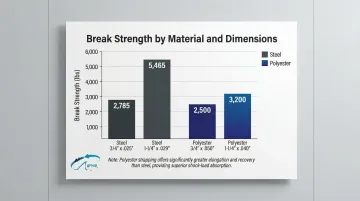
Steel's break strength advantage is real — but for loads under 3,000 lbs, heavy-duty polyester closes the gap. Where polyester falls short in raw strength, it compensates with flexibility that steel physically cannot provide.
Flexibility & Load Behavior
Steel: Rigid with <1% elongation. Holds shape excellently on stable loads but cannot adapt when loads settle, expand with moisture (like green lumber), or contract during transit. This rigidity causes strap loosening or load damage on dynamic loads.
Polyester: Elongates 12-20% and recovers tension. When loads shrink or settle, polyester contracts to maintain strap tightness — critical for long-distance shipments where load behavior changes over time.
Safety & Handling
Steel introduces several handling hazards:
- Sharp edges create laceration risk during application and removal
- Cut straps snap back with significant force, causing serious injuries
- Requires PPE and trained personnel for safe operation
Polyester: Safer to apply and remove with no snap-back risk. Compatible with battery-powered tools and automated strapping machines, reducing worker exposure to repetitive strain injuries.
What is Steel Strapping?
Steel strapping is a high-tensile banding material made from high-carbon steel alloys, designed for the most demanding industrial load-securing applications. With a history as the default choice in manufacturing and heavy freight industries, steel strapping remains the standard where maximum break strength is non-negotiable.
Core performance advantages for heavy loads:
- Highest break strength among all strapping types
- Dimensional rigidity prevents strap deformation under compression
- Excellent performance with sharp-edged or cornered loads (steel plates, I-beams, metal coils) that would cut softer materials
- No degradation from prolonged UV exposure
These strengths come with a significant trade-off: rigidity.
When loads settle, expand, or contract during transit, steel cannot adapt. Timber, for example, may absorb moisture and swell or dry out and shrink. With less than 1% elongation, steel either loosens and allows load shift or sustains damaging pressure on a shrinking load.
Bend performance is another variable worth noting. ASTM D3953 specifies bend testing requirements for steel strapping, but manufacturers do not publish universal break-strength loss percentages at 90-degree bends — figures vary by steel grade, thickness, and bend radius.
Variations for Heavy-Load Applications
ASTM D3953 defines standard steel strapping finishes:
- Finish D (Plain/Uncoated): Most cost-effective; corrosion-prone in outdoor or humid environments
- Wax-Coated: Optimizes tension transmission through bundled loads
- Finish B (Galvanized): Hot-dipped or electro-deposited zinc coating in three grades (Heavy, Moderate, Commercial) for corrosion resistance
- Stainless Steel: Type 201, 304, or 316 alloys for extreme corrosion resistance and chemical exposure environments
Use Cases of Steel Strapping
Steel strapping dominates in specific heavy-load applications:
- Railroad shipments: AAR Circular 42-N mandates steel strapping meeting ASTM D3953 for certain non-containerized rail freight, though AAR-approved Type 1A non-metallic alternatives are permitted as equal-strength substitutes
- Steel industry: Bundling I-beams, plates, and metal coils
- Heavy machinery: Securing industrial equipment during transport
- Scrap metal baling: Wire and scrap metal bundling
- Metal containers: Holding metal drums and containers
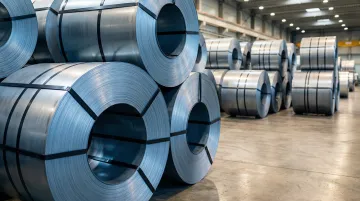
The railroad bullet above covers AAR requirements in full — the key takeaway being that non-metallic strapping is a compliant option at equal breaking strength, not a workaround.
What is Plastic Strapping?
Plastic strapping covers two distinct material types, and knowing the difference matters for heavy-load applications.
Polypropylene (PP): Light-to-medium duty only. Loses tension quickly through creep. Not suitable for heavy loads.
Polyester (PET): The correct comparison point against steel for heavy-load applications. Many PET straps use recycled content, reducing material costs while meeting sustainability targets.
Core Performance Benefits of Polyester Strapping
- Tension retention: Polyester holds tension across long-distance shipments. A 28-year exhumation study on high-tenacity PET showed no measurable reduction in residual strength.
- Elongation recovery: PET stretches 12–20% under shock impact and snaps back to tension. When loads settle or shrink, the strap recovers — steel's <1% elongation offers no such recovery.
- Corrosion resistance: PET is 100% rust-free and hydrophobic. It won't stain products or break down in moisture and salt spray environments that corrode steel.
- UV resistance: Standard PET resists UV degradation. Manufacturers add inhibitors for extended outdoor storage beyond standard cross-country transit timeframes.
Primary Limitation — Sharp Edge Vulnerability
Polyester cannot be applied directly to loads with sharp 90-degree edges or corners. Without protection, the strap can be cut through during transit.
Edge protectors and corner boards solve the problem, but buyers need to plan for those accessories. AAR Open Top Loading Rules (OTLR) General Rule 17.2.7 mandates metal corner or edge protection between banding and any sharp angle capable of cutting the strap.
Operational Advantages Driving Industry Adoption
- Safer to cut and handle (no snap-back laceration risk)
- Compatible with battery-powered and automated strapping tools
- Easier for less experienced workers to apply correctly
- Lower total cost of ownership through reduced injury claims
Use Cases of Plastic (Polyester) Strapping
Polyester strapping has become the standard or preferred choice for:
- Bundling lumber and timber (adapts to moisture expansion/contraction)
- Securing cinder blocks and bricks
- Palletizing heavy unitized loads (beverages, packaged goods)
- Banding tiles and construction materials
- Unitizing heavy pallet loads in distribution centers
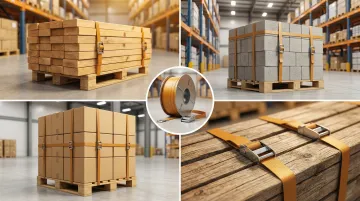
Alliance Packaging Group stocks polyester and polypropylene strapping in a range of widths and break strengths, with same-day shipping available for most specifications.
Steel vs. Plastic Strapping for Heavy Loads: Which is Better?
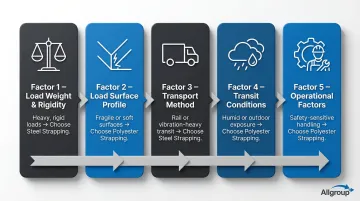
No single strapping material wins every application. The right choice depends on your specific load, transit conditions, and operational setup. Work through these five factors to find your answer:
1. Load Weight and Rigidity
Steel excels with extremely heavy, dimensionally stable loads — think coiled steel, granite slabs, or structural lumber. If your load compresses, settles, or shifts during transit, high-tension polyester strapping often performs better because it absorbs movement without snapping.
2. Load Surface Profile
Sharp edges and rough corners can slice through plastic strapping under load tension. Steel handles abrasive surfaces without issue. For metal pipe, concrete products, or rough-cut lumber, edge protectors paired with polyester strapping can be an alternative — but steel remains the safer default.
3. Transport Method
Rail shipments often require steel strapping by carrier specification. Before selecting plastic, confirm whether your freight carrier or destination facility has strapping material requirements — some industries and transport modes leave little room for substitution.
4. Transit Conditions
Steel rusts when exposed to moisture, which can compromise strap integrity and stain the load. Plastic strapping resists corrosion and performs consistently across temperature swings. For outdoor storage, marine freight, or humid environments, plastic holds a clear advantage.
5. Operational Factors
Three practical considerations often settle the decision:
- Cost: Steel strapping costs more per unit and requires more expensive tooling
- Worker safety: Steel edges create cut hazards during tensioning and removal; plastic is significantly safer to handle
- Automation: Plastic strapping integrates more readily with automatic strapping machines, reducing labor requirements in high-volume operations
When Steel is the Right Choice
Steel strapping is best suited for:
- Heavy machinery, steel coils, and metal structures that demand maximum break strength
- Non-containerized rail freight governed by AAR regulations (though AAR-approved polyester alternatives do exist)
- Loads undergoing repeated handling across long distances and multiple load/unload cycles
- Outdoor storage with prolonged UV exposure that extends well beyond standard transit timeframes
When Polyester is the Better Choice for Heavy Loads
Polyester strapping outperforms steel for:
- Heavy palletized goods: Lumber, bricks, beverages, construction materials
- Loads that settle or shift: Products that absorb moisture, compress, or expand during transit
- Operations prioritizing worker safety: Facilities reducing injury claims and insurance costs
- Automated strapping lines: Semi- or fully-automated operations requiring tool compatibility
- Standard over-the-road heavy freight: Most truck shipments not involving rail
Cost-Efficiency Reality: Total Cost of Ownership
Published case studies quantify the TCO benefits of switching from steel to polyester:
| Industry | Result |
|---|---|
| Steel coil manufacturer | 100% elimination of strapping injuries; 25% lower cost per shipment; 10% productivity gain |
| Lumber mill | Material cost dropped from $0.056/ft (steel) to $0.016/ft (PET) — 71% savings in year one, including new tool costs |
| Commercial door manufacturer | 50% reduction in total packaging costs; significant drop in transit damage |
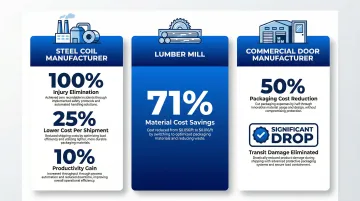
These savings come not just from lower per-foot material costs, but from eliminated injury claims, faster application times, and reduced product damage.
Real-World Industry Example
A commercial door manufacturer running high-volume automated lines found the switch to PET particularly impactful. Beyond the 50% reduction in packaging costs, transit damage claims dropped sharply — because polyester's elongation recovery kept loads stable through the vibration and shifting common in long-haul freight. That damage reduction alone offset the cost of new tooling within the first quarter.
The key detail: the lumber mill and door manufacturer examples above used different strap dimensions and tool configurations. Matching strap width, thickness, and break strength to your specific load profile is what drives results — not simply swapping steel for PET.
Alliance Packaging Group supplies both steel and polyester strapping nationwide, and can help match strap specifications to your load type, line speed, and tooling setup. Reach the team at sales@apg-go.com or 770-309-1012.
Conclusion
Steel strapping remains the unmatched choice for the heaviest, most rigid, and sharp-edged industrial loads — and is required in specific freight contexts like certain railroad shipments. For the broad spectrum of heavy-load applications beyond those conditions, polyester strapping delivers equivalent or superior performance with meaningful advantages in cost, safety, and operational flexibility.
The right choice comes down to your load type, freight requirements, and operational constraints — and getting it wrong costs more than the strapping itself. Alliance Packaging Group stocks both steel and polyester strapping with factory-direct pricing and nationwide just-in-time delivery, so you can source exactly what your application requires without lead-time delays or distributor markups.
Frequently Asked Questions
What is the difference between steel and plastic strapping?
Steel strapping offers the highest break strength and is best for the heaviest, rigid, sharp-edged loads and certain rail freight. Plastic strapping (polyester/PET) provides high tension retention with flexibility, lower cost, and safer handling — suitable for most other heavy-load applications.
How much weight can plastic strapping hold?
Polyester (PET) strapping handles very heavy loads — common heavy-duty sizes include 3/4" x .050" (2,500 lbs), 1" x .050" (3,000 lbs), and 1-1/4" x .050" (4,000 lbs). Polypropylene (PP) is not rated for heavy-load use and should not be substituted.
Is polyester strapping as strong as steel strapping?
Steel strapping has a higher absolute break threshold, meaning it holds more total weight before failing. Polyester achieves comparable tensile strength per unit width and recovers tension as loads settle — something steel cannot do. For most non-railroad heavy loads, polyester provides sufficient strength with a practical handling advantage.
Can plastic strapping be used for railroad shipments?
No — the Association of American Railroads (AAR) mandates steel strapping or AAR-approved Type 1A non-metallic strapping meeting ASTM D3950 for non-containerized railroad freight. Standard plastic strapping without AAR approval does not meet this regulatory requirement.
What type of plastic strapping is best for heavy loads?
Polyester (PET) strapping specifically — not polypropylene (PP), which loses tension quickly and is rated for light-to-medium duty only. Polyester maintains tension over time, which directly prevents load shift and damage during long hauls.
Is steel strapping more expensive than plastic strapping?
Yes. Steel strapping typically runs $0.19–$0.79/ft and fluctuates with commodity markets. Polyester strapping costs $0.02–$0.09/ft, with more stable pricing — and fewer injury-related handling costs compared to steel's sharp edges and recoil risk.