Introduction
Strapping is one of the last steps on a packaging line, yet choosing the wrong machine orientation—horizontal vs. vertical—creates bottlenecks, damages products in transit, and drives up labor costs. This decision directly impacts machine footprint, load compatibility, throughput speed, and integration with existing conveyor systems.
Nearly 48% of shipments lack proper stabilization devices, leading to severe shifting in transit. Up to 11% of unit loads arrive damaged at distribution centers — most often because freight wasn't correctly secured to the pallet.
Whether you're securing individual cartons on a high-speed e-commerce line or stabilizing palletized lumber for cross-country shipment, matching machine orientation to product type determines how fast product moves through your line and how much labor it takes to get there.
Key Takeaways
- Horizontal strapping machines excel for cartons, bundles, and high-throughput inline conveyor applications
- Vertical strapping machines loop over the top and bottom, making them the go-to for tall products and pallet stability
- Your decision hinges on product shape, production volume, load stability, and how the machine fits your existing line
- Many high-volume operations use both types in tandem for complete load security
- No single machine wins universally — the right fit depends entirely on your specific operation
Horizontal vs. Vertical Strapping: Quick Comparison
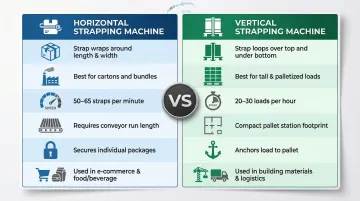
| Feature | Horizontal Strapping Machine | Vertical Strapping Machine |
|---|---|---|
| Strap Orientation | Wraps horizontally around length/width | Applied vertically over top and under bottom |
| Best Product Fit | Cartons, bundles, flat items on conveyor lines | Tall/long products, stacked loads, palletized goods |
| Typical Throughput | 50-65 straps per minute (fully automatic) | End-of-line or offline, paced to palletizing cycle |
| Floor Space Requirement | Requires conveyor run length before and after arch | Compact footprint for pallet strapping stations |
| Pallet/Load Security Role | Secures individual packages or bundles | Anchors load to pallet, preventing vertical shift |
| Common Industries | E-commerce, food & beverage, retail distribution, printing | Building materials, paper, beverage palletizing, logistics |
What Is a Horizontal Strapping Machine?
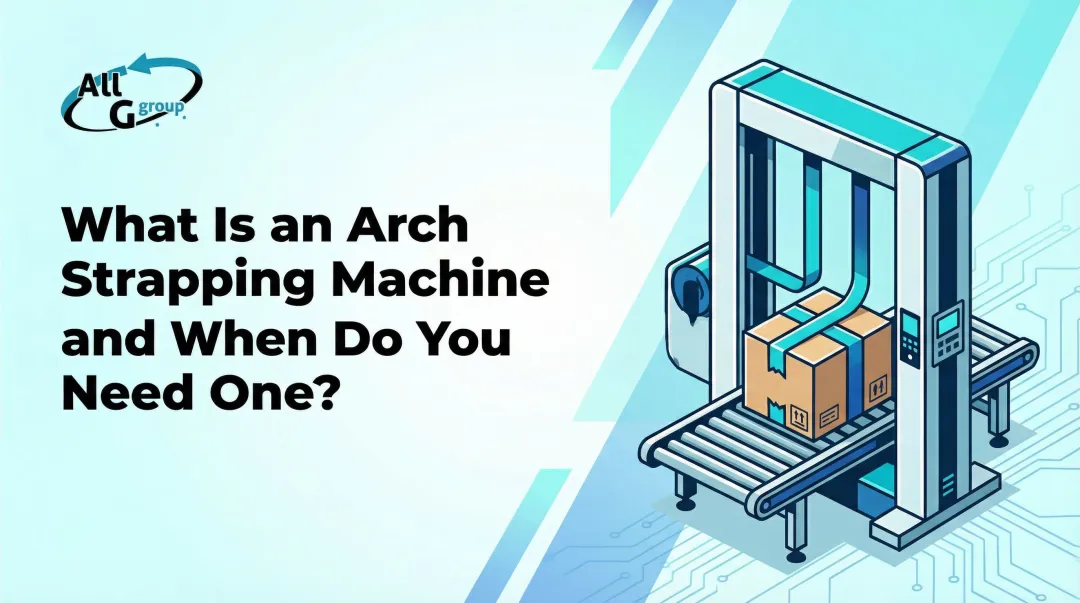
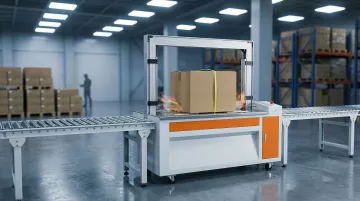
A horizontal strapping machine features a strapping arch oriented so the strap travels horizontally around the package—encircling its length or width—as the product moves through the machine on a conveyor. This is the most common configuration for inline packaging line automation.
How It Works
Product feeds into the machine via conveyor. The arch automatically threads and tensions the strap, seals it via heat seal or friction weld, and ejects the finished package—all in seconds. Fully automatic models complete the entire cycle without operator intervention, making them a reliable driver of high-speed distribution throughput.
Core Benefits
- Speed: Modern automatic models achieve 50 to 65 straps per minute—the PAC P702-59 tops out at 65 cycles per minute, the Mosca RO-M Fusion at 55.
- Consistent tension: Electronic tension control delivers repeatable, calibrated securement that protects product integrity across every cycle.
- Line integration: Horizontal machines slot naturally between case sealing and palletizing equipment, supporting continuous conveyor flow without manual handoffs.
Variations and Subtypes
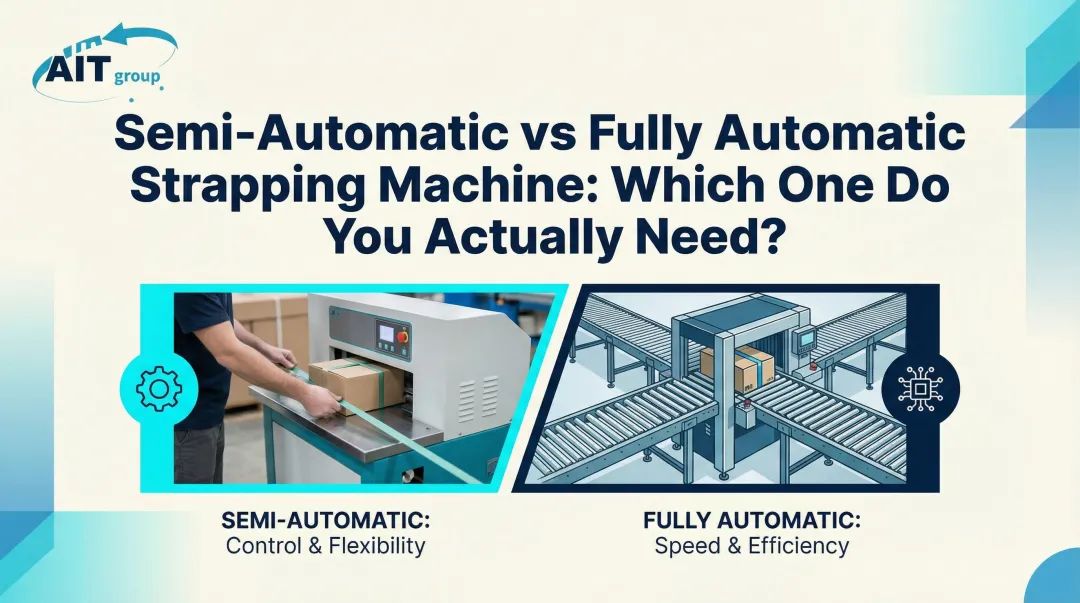
- Semi-automatic: Operators insert product and trigger the cycle manually—lower cost, lower throughput.
- Fully automatic: Product feeds via conveyor with no manual handling; ideal for high-volume lines.
- Single- vs. multi-strap: Basic units apply one strap per package; multi-strap configurations apply two or more simultaneously for heavy or long loads.
- Adjustable arch sizes: Variable arch dimensions accommodate different package heights and widths without manual reconfiguration—useful for mixed-SKU operations.
Use Cases of Horizontal Strapping Machines
Horizontal strapping typically positions mid-line or end-of-line between case sealing and palletizing, making it a natural fit for distribution centers and fulfillment operations.
Industries where horizontal strapping dominates:
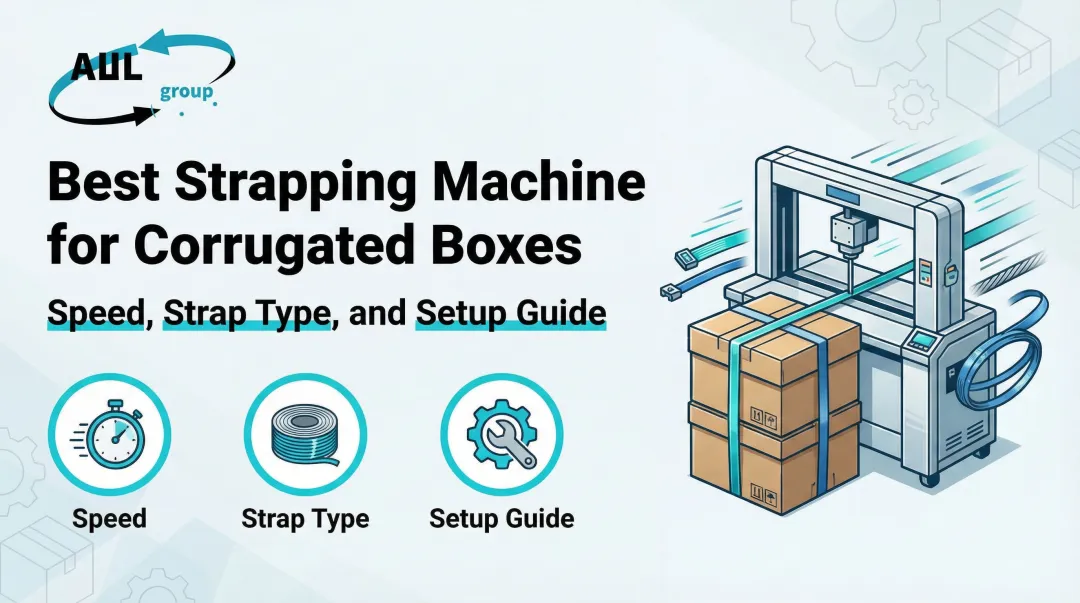
- E-commerce and retail distribution: corrugated cartons headed for parcel shipment
- Food and beverage: bundled multipacks of cans, bottles, or boxes
- Printing and publishing: newspapers, magazines, and catalog stacks
- Electronics manufacturing: component boxes and equipment shipments
The global strapping machine market is projected to reach $8.15 billion by 2033, with e-commerce and warehouse automation leading that growth. For operations in those sectors, horizontal strapping is often the first machine on the shortlist—which makes understanding where vertical strapping fits that much more important.
What Is a Vertical Strapping Machine?
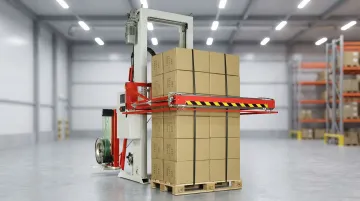
A vertical strapping machine applies the strap in a vertical plane—running up one side, over the top, down the other side, and under the bottom of the load. This orientation anchors the load from top to bottom, securing both individual tall products and palletized loads.
How Vertical Strapping Secures Loads Differently
Rather than consolidating a package laterally, vertical strapping compresses the load against the pallet base or secures a tall stack against collapsing. This prevents vertical shifting during transit and warehouse stacking, addressing an entirely different stability challenge than horizontal strapping.
Core Benefits
- Applies significant containment force—4,450N to 7,000N for PET strap and up to 18,000N for steel—physically locking goods to the pallet or transport base
- Excels at securing stacked cases, bundles, or uniform products that require top-to-bottom compression
- Prevents the entire stack from sliding or toppling during handling and transit by anchoring it to the pallet base
Variations and Subtypes
Semi-automatic arch machines suit lower-volume operations—operators position the product manually and trigger each cycle.
Automatic pallet strapping machines run loads through on a conveyor or turntable, detecting position and applying straps without manual intervention.
Single-item machines handle long profiles like pipes and lumber bundles, while dedicated pallet strapping machines manage fully palletized loads.
Use Cases of Vertical Strapping Machines
Vertical strapping fits at the end of a palletizing line or as a standalone station for long or irregular products—serving as the final securing step before products enter storage or shipping.
Industries where vertical strapping dominates:
- Building and construction materials: Lumber, piping, drywall, and roofing materials
- Paper and printing: Reams, rolls, and stacked sheets
- Beverage and food: Palletized uniform cases of bottles, cans, or packaged goods
The NMFTA LTL Freight Packaging Guidelines explicitly require proper palletizing and securing via stretch wrap combined with metal or nylon bands for heavy pallets to prevent load shift and package separation—a requirement vertical strapping directly addresses.
Horizontal vs. Vertical: Which Fits Your Packaging Line?
Product and Load Type: The Primary Decision Factor
If your line handles individual cartons, bundles, or flat packages moving on a conveyor, horizontal strapping is the natural fit. If you need to secure tall products, long profiles, or stabilize a palletized load before shipment, vertical strapping is the priority.
Key questions to ask:
- Are you strapping individual packages or complete pallet loads?
- Do your products move continuously on a conveyor, or are they staged for batch processing?
- Is your primary concern carton integrity or pallet stability?
Throughput and Line Speed Compatibility
Horizontal machines integrate into high-speed automated lines with minimal operator input, achieving 50-65 straps per minute. Vertical pallet strapping machines are typically applied at the end of a palletizing cycle and may pace differently—often 20-30 loads per hour depending on pallet size and strap count.
Action step: Audit your current line speed and match it to machine throughput specs. A horizontal strapping bottleneck can slow an entire fulfillment line; an undersized vertical strapper creates dock congestion.
Space and Integration Considerations
Horizontal machines require:
- Sufficient conveyor run length before and after the arch (typically 6-10 feet total)
- Overhead clearance for the strapping arch
- Integration points for upstream and downstream conveyors
Vertical pallet strapping machines need:
- Clearance for pallet entry (often 8-12 feet including approach and exit zones)
- Turntable or conveyor pallet transfer system
- Adequate floor space for the strapping arch and control panel
Before specifying a machine type, map your facility floor plan. Measure available conveyor run length, ceiling height, and floor space to confirm the machine physically fits your footprint.
The Case for Using Both
For operations shipping palletized goods where both individual carton integrity and pallet stability matter, a combination of inline horizontal strapping (per carton) and end-of-line vertical strapping (per pallet) provides complete load security.
Example: Offergeld Logistics faced challenges transporting asymmetrical retail displays made of delicate cardboard. Their solution combined horizontal strapping to hold displays together without crushing and vertical strapping to secure units to Euro pallets with edge protection. The outcome: improved transport safety, faster strapping cycles, and reduced manual labor.
For operations evaluating both machine types, Alliance Packaging Group supplies strapping machines, PP and PET consumables, and conveyor integration support under one relationship—with factory-direct pricing and nationwide delivery.
Real World Examples
Ford Motor Co. Eliminates Damaged Parts and Cuts Cycle Times
At Ford's 3.1-million-square-foot Parts Redistribution Center, inconsistent manual band tension on corrugated boxes of varying thicknesses (200 single-wall to 500 triple-wall) caused significant product damage.
The problem: Manual strapping created variable tension, crushing some boxes while leaving others too loose, resulting in damaged parts and costly rework.
The solution: Installation of 20 automated horizontal strapping machines from Ovalstrapping, capable of regulating tension based on specific box material.
The results:
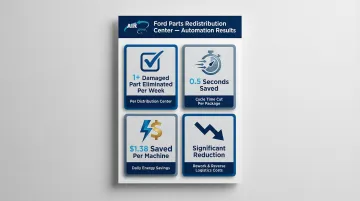
- Eliminated at least one damaged part per week per distribution center served
- Cut cycle times by 0.5 seconds per package
- Achieved energy savings of $1.38 per machine per day
- Massive reduction in rework, repair, and reverse logistics costs
SmartCap Reduces Workers' Comp and Transit Damage
SmartCap transitioned from manual steel strapping to automated PAC Strapping top-seal machines using polyester (PET) strap for their heavy, imbalanced truck cap boxes.
The problem: Manual steel strapping posed severe laceration and recoil risks for workers handling heavy, off-balance loads — and inconsistent tension was driving up transit damage claims.
The solution: Transition to automated PAC Strapping top-seal machines using polyester (PET) strap.
The results:
- Eliminated severe laceration and recoil risks of manual steel strapping
- Reduced workers' compensation claims
- Provided consistent tension, significantly reducing damaged goods and costly product returns
- Improved overall packaging line throughput
Both cases point to the same pattern: the wrong strapping setup — wrong orientation, wrong tension control, wrong strap material — shows up as damaged product, slower lines, or injured workers. If any of those sound familiar, contact Alliance Packaging Group to find the right fit for your operation.
Conclusion
Horizontal strapping excels for inline carton and bundle securing at high throughput. Vertical strapping is the right choice when load stability, pallet security, or long/tall product handling is the priority. Many operations benefit from both.
The right strapping machine reduces transit damage, cuts labor costs, and keeps your packaging line moving at target speed. Match machine orientation to your operation by weighing:
- Product type — cartons and bundles vs. long, tall, or palletized loads
- Production volume — throughput demands and cycle time requirements
- Load stability needs — whether unitizing or inline securing is the priority
- Packaging line configuration — available floor space and integration with upstream equipment
Frequently Asked Questions
What are the different types of strapping machines?
The main categories are manual (handheld tools for low volume), semi-automatic (operator-assisted for mid-volume), and fully automatic (inline or pallet systems for high-volume operations). Each category is available in horizontal or vertical arch configurations depending on application requirements.
What is the difference between banding and strapping?
Strapping uses heavier-gauge material (PP, PET, or steel) applied under high tension to secure or bundle loads for transport. Banding typically uses lighter, narrower material for light bundling or retail presentation. The two are not interchangeable—each requires its own tension specifications and machine type.
What are the different types of strapping materials?
The three main options are polypropylene (PP) for light-to-medium loads and cost efficiency, polyester (PET) for heavy loads requiring high tension and elastic recovery, and steel for maximum-security industrial applications. Confirm machine compatibility before switching materials, as not all machines handle every strap type.
What is the useful life of a strapping machine?
With proper maintenance, most industrial strapping machines last 10 to 15 years or more. Lifespan depends on usage volume, strap material run through the machine, following maintenance schedules, and the build quality of the original equipment.
Can horizontal and vertical strapping be used together on the same packaging line?
Yes, many operations run both in sequence. Horizontal strapping secures individual cartons or bundles mid-line, while vertical strapping handles end-of-line palletized loads—giving the full stack a second layer of security before shipment.
How do I know if my current strapping machine is the wrong type for my operation?
Warning signs include recurring transit damage or freight claims, excessive strap breakage, slow line throughput caused by the strapping station, or operators manually repositioning loads to accommodate machine orientation. Any of these suggest a mismatch between machine type and product requirements.