Introduction
Strapping machines are essential equipment in packaging operations across manufacturing, warehousing, and distribution facilities. When these end-of-line machines run smoothly, production flows without interruption. A single failure, though, can bring an entire line to a stop.
The costs of neglected maintenance add up fast. Common consequences include:
- Lost production output — breakdowns during peak windows can cost manufacturers an average of $260,000 per hour
- Damaged shipments — inconsistent strap tension creates weak seals that fail in transit
- Operator safety hazards — worn cutting blades and malfunctioning sealing heads put workers at risk
- Inflated repair bills — emergency fixes run 3 to 5 times more than planned maintenance due to overtime labor, expedited parts, and damage to nearby components
What follows is a practical maintenance framework — covering warning signs, maintenance types, and a frequency-based checklist — so your strapping equipment stays running when production demands it most.
Key Takeaways
- Regular preventive maintenance reduces unplanned downtime and extends machine lifespan by 20–40%
- Four maintenance strategies to know: preventive, corrective, predictive, and major overhaul — each suited to different failure scenarios
- Watch for strap feed jams, weak seals, inconsistent tension, grinding noises, and recurring error codes
- A structured schedule matters: daily cleaning, weekly lubrication, monthly calibration, semi-annual professional servicing
- Operator training and correct strapping material selection prevent most common failures
Why Strapping Machine Maintenance Matters
Preventive maintenance isn't an expense—it's an investment that delivers measurable returns. Research by Jones Lang LaSalle analyzing 14 million square feet of facilities found that preventive maintenance produces a 545% return on investment, saving $5.45 for every dollar spent. The savings come primarily from extending equipment lifespan and delaying costly capital replacements.
The performance impact of poor maintenance extends beyond the machine itself. Inconsistent strap tension, weak seals, and feed problems result in package failures during transit. When strapping standards slip—such as securing only one container face instead of all sides—heavy parts can split sidewalls in transit, leading to damage claims and lost customer trust.
Those package failures are costly, but the safety exposure is just as serious. Worn cutting blades, malfunctioning sealing heads, and electrical faults create real operator hazards. The Bureau of Labor Statistics reports that machinery is involved in 58% of all work-related amputations. Regular maintenance protects both workers and your organization's compliance standing under OSHA standards.
Small problems also compound fast. A worn feed roller or dirty sealing element accelerates wear on surrounding components — and the financial math gets ugly quickly. A Plant Engineering risk analysis illustrates how deferred wear-part replacement escalates:
- 1 month delayed: 20% failure probability — $10,000 risk cost
- 2 months delayed: 50% failure probability — $30,000 total risk cost (including $5,000 in collateral structural damage)
Catching a worn part early costs a fraction of what reactive repairs demand.
Types of Strapping Machine Maintenance
Maintenance isn't one-size-fits-all. The right approach depends on machine type (semi-automatic vs. fully automatic), usage intensity, and operational environment.
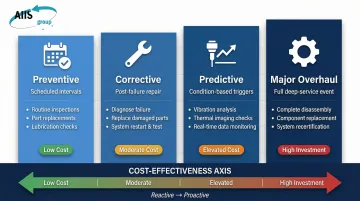
Routine / Preventive Maintenance
Preventive maintenance involves scheduled upkeep performed at regular intervals regardless of machine condition. Tasks include:
- Cleaning strap guides and feed rollers
- Lubricating moving parts
- Inspecting blade sharpness
- Verifying tension calibration
This approach prevents the majority of common failure points before they escalate. The costs are relatively low—primarily labor time and inexpensive consumables like cleaning supplies and lubricants—making it the most cost-effective strategy for any strapping operation.
Corrective / Reactive Maintenance
Corrective maintenance is triggered by an actual failure or malfunction. Typical repairs include replacing worn feed rollers, dull cutting blades, failed sealing elements, or damaged electrical components after they cause a stoppage.
Over-relying on reactive maintenance drives up total repair costs fast. Reactive maintenance runs 3 to 5 times more expensive than preventive maintenance—a gap driven by overtime labor rates, expedited parts shipping fees ($275–$690 per order), and cascade damage to components that were working fine before the original failure.
Predictive / Condition-Based Maintenance
Predictive maintenance uses monitored performance indicators to anticipate part failure before it happens. Key metrics include:
- Strap tension consistency
- Seal strength measurements
- Cycle counts
- Error frequency logs
This approach is most practical for high-volume, fully automatic strapping lines where sensor monitoring and usage-based triggers can be implemented. Costs are higher upfront but the payoff is real—predictive maintenance can reduce downtime by 30–50% compared to reactive operations.
Major / Overhaul Maintenance
Major overhaul is a comprehensive deep-service event covering all mechanical, pneumatic, and electrical systems. It's typically scheduled after a defined number of operating hours (often 1,000,000 cycles) or years of use rather than in response to failure.
Overhauls should be planned events performed by qualified technicians or the machine manufacturer's service team. Treating them as scheduled production events—not emergency responses—keeps warranties intact and gives you the chance to swap out aging components before they cause unplanned downtime. Key overhaul activities typically include:
- Full inspection of mechanical drive components
- Replacement of pneumatic seals and fittings
- Electrical system audit and wiring checks
- Lubrication of all bearing and pivot points
Warning Signs Your Strapping Machine Needs Maintenance
Most strapping machine failures don't happen without warning. The signs appear first — you just need to know what to look for before a minor symptom becomes a full production stop.
Strap Feeding and Tensioning Problems
Watch for these indicators:
- Straps not feeding cleanly through the arch
- Excessive strap tails after sealing
- Inconsistent tension levels on finished packages
- Incomplete or unclean strap cuts
These symptoms typically trace back to worn or dirty feed rollers, debris in the strap track, or misaligned guides.
A dull or mispositioned cutter blade is its own problem: long strap tails interfere with subsequent packages and accelerate wear on surrounding components.
Seal Quality Deterioration
Weak, open, or inconsistent seals on completed packages are direct signs that the sealing head is dirty, the heating element is degrading, or the sealing temperature has drifted from its calibrated setting.
Strap breakage during the tension cycle points to a different but equally urgent problem: either the strap grade doesn't match the machine's tension setting, or tension has crept upward through repeated manual adjustments over time.
Unusual Noises, Vibration, or Error Codes
Grinding, clicking, or unusual resistance during operation signal worn bearings, debris lodged in moving parts, or insufficient lubrication in pivot points and guides.
Frequent error codes, unexpected automatic stops, or sensors that fail to detect packages consistently point to electrical or sensor faults that require proper inspection. Resetting the machine repeatedly without diagnosing the cause only delays a larger failure.
Increasing Frequency of Downtime and Temporary Fixes
Recurring minor issues becoming more frequent — jams that clear quickly, seals that occasionally need re-strapping, manual resets between cycles — are a pattern that signals underlying component wear rather than isolated incidents.
The 1-10-100 rule applies here: a defect costs $1 to fix early, $10 during production, and $100 if it reaches the customer. Applied to packaging, ignoring a worn tension wheel or dirty heater plate escalates from a minor parts cost to a major transit damage claim.
Strapping Machine Maintenance Checklist
Maintenance frequency should be scaled to usage intensity and machine type. High-volume continuous operations (multi-shift, fully automatic) require more frequent checks than low-use or intermittent semi-automatic machines. Always cross-reference the manufacturer's manual before setting your schedule.
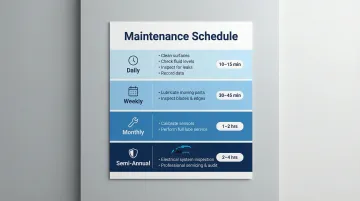
Maintenance Frequency Schedule
| Interval | Required Tasks | Estimated Time |
|---|---|---|
| Daily | Clear strap dust and debris from rollers, guides, cutters, and sealing area (compressed air); verify strap feed and tension consistency; check for active error codes; wipe down external surfaces | 10–15 min |
| Weekly | Lubricate front bar, rear bar, press bar, and all pivot/guide points (light non-resinous oil, SAE 30); inspect cutter blade sharpness and sealing element cleanliness; examine drive belts and gears for wear; verify electrical connections are tight and corrosion-free | 30–45 min |
| Monthly | Full lubrication service (bearings and pneumatic components); clean both sides of heater plate (polish with fine sandpaper when cool if needed); verify slide table and strap track return smoothly; recalibrate tension and sealing temperature; replace worn consumables (blades, rollers, sealing dies) | 1–2 hrs |
| Semi-Annual | Comprehensive electrical inspection (circuit boards, wiring looms, sensors, motor drives); inspect frame and mounting points for cracks or loose fasteners; full sensor testing and recalibration; schedule professional service for fully automatic machines | 2–4 hrs |
Operational Notes
Adjust for your actual usage. High-volume, multi-shift operations should advance the schedule — treat weekly tasks as daily, and monthly tasks as bi-weekly. Low-usage machines can safely stretch weekly tasks to bi-weekly intervals.
Log everything. Document completed tasks, replaced parts, and any anomalies observed. A written log enables pattern recognition, supports warranty claims, and keeps accountability consistent across shifts.
Keep consumables on hand. Maintenance delays caused by missing parts are avoidable. Work with a reliable supplier — Alliance Packaging Group, for example, carries over 10,000 packaging products in stock with nationwide just-in-time delivery — so routine replacements never stall your schedule.
OEM Warning: All strap transport components (feed rollers, strap guides) must stay completely free of oil and grease to prevent strap slippage. Lubricate only designated pivot points and bearings — never the strap path itself.
Conclusion
Strapping machine maintenance is not optional—it's a core operational discipline that protects production reliability, operator safety, and the long-term value of your equipment investment. The right approach balances routine preventive care with periodic professional servicing rather than waiting for failure to force action.
Preventive maintenance delivers a 545% ROI, while reactive repairs cost 3-5 times more and trigger compounding damage down the line. That financial gap widens further when you factor in unplanned downtime — at up to $260,000 per hour, a single avoidable breakdown can erase weeks of operational savings and compromise product quality across the supply chain.
Start today. Implement or review your maintenance schedule, train operators on daily and weekly tasks, and keep your consumables stocked before they run out. Alliance Packaging Group carries over 10,000 packaging and industrial products — including strapping materials — available for immediate nationwide shipment, so a depleted supply never becomes the reason your line stops.
Frequently Asked Questions
What should be included in a strapping machine maintenance checklist?
A complete checklist covers daily cleaning of feed rollers, strap guides, and sealing areas; weekly lubrication and blade inspection; monthly calibration and component replacement; and semi-annual professional servicing. Specifics vary by machine type, so always reference your manufacturer's manual.
What are the key elements of preventive maintenance for a strapping machine?
Core preventive maintenance covers five areas: regular cleaning, lubrication of moving parts, tension and seal calibration, timely replacement of wear parts (blades, rollers, sealing elements), and operator training on correct usage and material selection.
How often should a strapping machine be professionally serviced?
Most manufacturers recommend a full professional inspection at least once or twice per year. Machines running continuous multi-shift operations require more frequent servicing—often quarterly.
What are the most common signs that a strapping machine needs maintenance?
Watch for inconsistent strap tension, weak or open seals, strap feeding jams, unusual grinding or clicking noises, and an increasing frequency of error codes or manual resets.
Can operators perform strapping machine maintenance themselves, or is a technician required?
Daily and weekly tasks—cleaning, lubrication, and visual inspection—can and should be performed by trained operators. Monthly calibration and semi-annual deep servicing typically require a qualified technician, particularly for electrical and pneumatic systems.
How does using the wrong strapping material affect machine health?
Incorrect strap width, thickness, or grade causes excessive friction and accelerated wear on feed rollers and cutter blades. It also throws off tension calibration, leading to failed seals and more frequent jams. Check your machine specs before switching strap suppliers or grades.